Digital Media Design
W280Digital Media Design combines creative experimentation with professional practice. You will develop skills in visual communication, interaction design and digital production across contemporary platforms. Grounded in research and critical thinking, the course fosters collaboration, ethical awareness and responsible technology use, preparing you for confident, professional practice in evolving digital environments.

Course overview
Our Digital Media Design course combines industry-focused practice with creative experimentation. You will develop imaginative, technically skilled solutions through hands-on production, ideation, storytelling and interaction design. Emphasising collaboration, iterative processes and platform fluency, the course prepares you to thrive confidently in contemporary digital environments. Digital media practice thrives on collaboration, and this course develops your teamwork, leadership, communication and presentation skills while supporting confident professional self-positioning.
90% of Digital Media Design students were satisfied with the academic support they received on their course (National Student Survey 2026).

Over three engaging years, you will work within our well-equipped Digital Design Studio, bridging academic study and industry practice. From day one, you will undertake real-world design projects that build practical experience and enhance employability. Our curriculum reflects contemporary professional workflows, supported by advanced technology resources and 3D prototyping facilities. Occasional field trips further extend your learning beyond the studio, connecting creative exploration with professional and cultural contexts.
Throughout your degree, you will move beyond theory into live client projects that steadily expand and refine your professional portfolio. Through live briefs and case studies across print, web, app, animation, advertising and user experience, you will gain experience spanning diverse sectors. Alongside practice you will engage with theory, history and cultural contexts, developing research literacy, analytical thinking and reflective evaluation to ensure your design decisions are intellectually grounded and strategically informed. Industry placements offer valuable professional exposure and networking opportunities.
In your final year, you will explore consultancy, freelance and start-up pathways, building confidence and clarity for your future career. A Personal Development Plan (PDP) runs through each year of the course, supporting your academic progress and professional development. You will set your own goals, refine key skills such as communication, leadership or presentations. The course tutors, student success advisors and the careers team, offer tailored support to enhance your academic performance and career readiness that align with your goals.
What you need to know
Course start date
September
Location
On campus
Course length
- 3 years full-time
Apply
W280
Typical offer
96 - 112 points
Fees
From £10,050 pa
Why Winchester
- Collaborate on live projects: Work on real client briefs to gain experience in real-world scenarios and problem-solving.
- Learn industry-standard practices: Our curriculum prepares you for a successful career by building an impressive portfolio that will showcase your creativity and impress employers.
- Develop essential skills: Gain expertise in storytelling, critical thinking, and design while creating projects that make a real impact. Collaborate with NGOs, ethical brands, and grassroots movements to design campaigns that drive positive change, guided by sustainability and ethical branding.
- Master design industry tools: Explore the latest technologies and become a technically skilled designer who thrives in collaborative environments.
- Create in our dedicated Digital Design Studio: Work with Adobe tools, earn industry certifications, and have access to our immersive spaces, from film and photography studios to 3D printers. Push creative boundaries in our Digital Fabrication Lab with laser cutters and prototyping tools.
- Real placement opportunities: Gain access to exciting placements with our industry contacts that connect you with real-world experience.
Course details
Our aim is to shape 'confident learners' by enabling you to develop the skills needed to excel in your studies here and as well as onto further studies or the employment market.
You are taught primarily through a combination of lectures and seminars, allowing opportunities to discuss and develop your understanding of topics covered in lectures in smaller groups.
In addition to the formally scheduled contact time such as lectures and seminars etc.), you are encouraged to access academic support from staff within the course team and the wide range of services available to you within the University.
Independent Learning
Over the duration of your course, you will be expected to develop independent and critical learning, progressively building confidence and expertise through independent and collaborative research, problem-solving and analysis with the support of staff. You take responsibility for your own learning and are encouraged to make use of the wide range of available learning resources available.
Overall Workload
Your overall workload consists of class contact hours, independent learning and assessment activity.
While your actual contact hours may depend on the optional modules you select, the following information gives an indication of how much time you will need to allocate to different activities at each level of the course.
Year 1 (Level 4): Timetabled teaching and learning activity*
Teaching, learning and assessment: 264 hours
Independent learning: 936 hours
Year 2 (Level 5): Timetabled teaching and learning activity*
Teaching, learning and assessment: 264 hours
Independent learning: 936 hours
Year 3 (Level 6): Timetabled teaching and learning activity*
Teaching, learning and assessment: 252 hours
Independent learning: 948 hours
*Please note these are indicative hours for the course.
The Digital Media programmes are studio-based courses providing a working environment which mirrors industry practice whilst also affording good contact with peers and tutors doing studio based one-to-one teaching. The programme team are strongly in favour of learning by doing, so all modules are underpinned by practical project work. This not only provides you with an opportunity to practice newly-acquired skills and understanding but also an 'on task' means of assessing progress and the successful completion of modules.
Key features of the student experience are:
You will work in an industry-standard dedicated studio, equipped with 25 high-spec PCs loaded with professional creative software. In addition, you will have access to our Multimedia Centre, including specialist studios, podcast recording facilities, professional camera and audio equipment loans, and a wide range of production resources giving you the tools to create high-quality digital content across multiple platforms. Each year culminates in our public Degree Exhibition, where you showcase your work to invited creative agencies, studios and potential employers across the region. Students from Year 1 to Year 3 will present module projects to gain valuable professional feedback and celebrate the collective achievements of the course. Your learning extends beyond the studio. You will visit local galleries and take part in study trips to London, immersing yourself in vibrant cultural and creative scenes. We actively connect you with regional creative hubs, opening doors to valuable networking opportunities. Throughout the course, you will be encouraged to attend exhibitions, digital festivals and industry events, helping you explore emerging technologies, gain insight into future trends and build meaningful professional connections that support your career ambitions.
Teaching Hours
All class based teaching takes places between 9am – 6pm, Monday to Friday during term time. Wednesday afternoons are kept free from timetabled teaching for personal study time and for sports clubs and societies to train, meet and play matches. There may be some occasional learning opportunities (for example, an evening guest lecturer or performance) that take places outside of these hours for which you will be given forewarning.
Assessment
Our validated courses may adopt a range of means of assessing your learning. An indicative, and not necessarily comprehensive, list of assessment types you might encounter includes essays, portfolios, supervised independent work, presentations, written exams, or practical performances.
We ensure all students have an equal opportunity to achieve module learning outcomes. As such, where appropriate and necessary, students with recognised disabilities may have alternative assignments set that continue to test how successfully they have met the module's learning outcomes. Further details on assessment types used on the course you are interested in can be found on the course page, by attending an Open Day or Open Evening, or contacting our teaching staff.
Percentage of the course assessed by coursework
The assessment balance between examination and coursework depends to some extent on the optional modules you choose. The approximate percentage of the course assessed by different assessment modes is as follows:
Year 1 (Level 4)*:
87% coursework
13% practical assessment
Year 2 (Level 5)*:
84% coursework
16% practical assessment
Year 3 (Level 6)*:
96% coursework
4% practical assessment
*Please note these are indicative percentages and modes for the programme.
Modules
Please note the modules listed are correct at the time of publishing. The University cannot guarantee the availability of all modules listed and modules may be subject to change. The University will notify applicants of any changes made to the core modules listed. For further information please refer to winchester.ac.uk/termsandconditions
Modules
In this module students will develop an independent creative practice through a series of structured design projects. There will be an emphasis on interpreting design briefs, preparing proposals and creating presentations of design ideas and development work. Students will be encouraged to use appropriate software, materials, processes and concepts underpinned by design thinking and iteration, and to foster critical thinking and reflection in their design work.
This module introduces students to the essential technical and creative skills required for digital media production. It provides a foundation in multi-media design principles, media capture, editing, and integration using industry-standard tools. Emphasis is placed on building confidence with software, file management, and digital working practices while developing an understanding of how tools are used to create and refine visual outcomes. Students will explore the role of digital media in contemporary communication and develop a portfolio of practical work using industry-standard software including the Adobe Creative Cloud. The module also introduces and develops various skills required for the production of digital video, such as how to handle a camera, how to assess and capture sound and light, and how to edit footage.
This module aims to introduce students to foundational and contemporary design theories and their practical applications. To develop critical understanding of historical, cultural, social, and ethical contexts influencing design. Also to equip students with research and analytical skills to inform creative decision-making and foster reflective practice through integration of theory and design processes.
This module introduces students to the importance of storytelling in shaping media, culture and society. Combining theoretical exploration and creative practice, students will explore how narratives construct meaning, identity, and reality across different media forms and contexts.
Students will examine and apply narrative theories and concepts, from classical structures to contemporary approaches, and consider how stories circulate and evolve within the media.
Alongside critical discussion, students will develop their own original narratives in a chosen medium—such as video, audio, digital, or interactive design—aimed at attracting and engaging specific audiences.
The module encourages reflection on the ethical, social and material implications, including environmental and sustainability concerns, of storytelling in a connected world and supports the development of narrative skills, a key attribute across media, creative and communication industries.
Modules
In this module, students will engage in collaborative client projects. designed to introduce them to the user-focused and practical principles within their chosen specialist field of study. These projects will encompass diverse target audiences and contrasting objectives, enabling students to develop a discerning understanding of end-user needs and the technical requirements of the final product. The emphasis is on client-centred work, promoting collaborative teamwork across different disciplines.
This module explores the intersection of graphic design, cognitive science, and psychology. Students will learn how human perception, cognition, and emotion, influence visual communication, branding, and user experience. Students will gain an understanding of the science behind design decisions and how to create highly effective, user-centred visuals. This module prepares graduates for roles in UX and branding, students will be equipped to design not just for aesthetics, but for emotional engagement and storytelling.
This module introduces students to the study and practice of social media. It develops students’ ability to use social media strategically, while encouraging them to understand its applications across a range of contexts. Through theoretical perspectives and practical exercises, students will engage with key debates about the influence of social media on contemporary social and political issues, analyse campaigns and brand initiatives, and apply techniques in branding, storytelling, PR, and audience engagement. The module also addresses the ethical, legal, and professional challenges associated with social media use.
Choose from:
Popular Media and Culture
In this module students will explore approaches and debates in the field of contemporary Popular Cultural Studies and are encouraged to develop and engage with these in relation to their own cultural interests. students will explore the cultural value of popular media and its varying genres and forms, as well as socio-political contexts that have influenced and been influenced by popular culture. This may include subjects such as popular music and journalism, video games, as well as the study of film and television. At the end of the module students will produce their own video project, for example a video essay or a documentary on an aspect of popular media and culture.
Collaboration Wins: global projects with impact
This module develops students’ ability to work collaboratively within global and socially engaged design contexts. Students work in teams using UX and design thinking methodologies to research and define the delivery of a design response to a real-world project brief. Students work on projects, proposed by leading organisations such as: RSA sparks, James Dyson awards, ISTD, A’ Design awards, D&AD pencil. Through this process they develop skills in shared ownership of decision-making. Emphasis is placed on strong communication, intercultural awareness and ethical responsibility. Students reflect on group dynamics and contribution throughout the process. As the project develops, students take increasing responsibility for defining impact, managing complexity and responding to change, using reflection and evidence to evaluate both outcomes and collaboration. The project culminates in a group design outcome supported by individual reflective analysis, preparing students for professional team-based practice at Level 6.
Modules
This module supports students in connecting academic study with professional creative practice through industry engagement and career-focused development. Students undertake a work placement or client-led project that enables them to apply their skills within real or simulated professional contexts, building confidence, independence, and professional judgement. Alongside this, students develop a coherent professional portfolio and career strategy aligned to their chosen pathway within the creative industries. The course emphasises reflective practice, ethical awareness, research-informed decision-making, and professional communication. Through their portfolio development and critical reflection for career planning, students consolidate their creative and professional identity and prepare for transition into graduate employment, freelance practice, or postgraduate study.
The Extended Independent Study will give students opportunities to employ the academic, critical and practical skills that they have acquired through your programme of study in order to pursue their own interests in developing either: (a) a traditional academic research project (10,000-word dissertation); or (b) a practical media project (e.g. a portfolio of journalism, videos, advertising campaign, public awareness campaign, producing a video game) alongside a shorter critical reflection (c. 4000 words). Teaching and support will be delivered throughout the year through regular tutorials with a designated supervisor as well as regular group study sessions.
Choose from:
Sustainable and Ethical Design
Sustainable and Ethical Design module equips students with the knowledge and skills to create environmentally and socially responsible design solutions. By integrating principles of sustainability, circular design, and ethical branding, students will develop innovative strategies to minimise environmental impact while promoting social good. This module is ideal for those who want to shape a more sustainable future through design, innovation, ethical practice, and collaboration. Students will be equipped to make a lasting impact in the creative industries and beyond.
Contemporary Media in Crisis: Art, Conflict and Dissent
In an era of ecological breakdown, political unrest, and digital disruption, media plays a pivotal role in shaping how societies understand and respond to crisis. Taking the climate crisis as a starting point and narratives around sustainability, this module critically examines the media’s role in the manufacture of contemporary crises and conflict, as well as how media producers and activists use media to represent, resist, and reimagine global challenges. Students will examine key case studies in contemporary culture and digital activism, analysing how aesthetics and technologies mediate power, emotion, and truth. Building on this critical awareness, students will explore the interactive nature of the media and interrogate their own subjectivity and positioning by media artefacts and institutions, exploring spaces for dissent and resistance through media practice. This module supports students to become critically-aware and socially-conscious media professionals.
Choose from:
Ghost in the Machine: Empathy, Design and Artificial Intelligence
In the 21st Century, we have seen the shift from broadcast to participatory media. Now, empathic media is coming to the fore. This is media that monitors, responds to, and potentially manipulates users’ emotions and motivations. This might take the form of social media algorithms that seek emotional triggers to stoke our anger and maintain our attention; facial recognition technology that categorises and simplifies our rich emotional life to make predictions of our future behaviour; or AI-chatbots, masquerading as companions and friends, mimicking social relationships to drive platform use. This raises a range of new challenges for media consumers and producers.
Building on theory and approaches to categorising and understanding emotion and distinctions between human and emulated empathy, this module equips students to critically engage with and understand contemporary and future forms of media, interrogating trends to understand the social and industry-related impacts of this form of technology.
Design in Motion
This module focuses on the advanced application of design principles within the field of motion graphics. Building on prior learning, students will explore motion as a primary mode of visual communication, developing concepts and outcomes in response to a range of professionally informed project briefs. Through practical workshops, experimentation, and critical reflection, students will refine their technical skills and design thinking to produce work aligned with contemporary industry standards. The module encourages the development of an individual visual approach while situating practice within current motion graphics contexts and professional expectations.
Choose from:
Creative Identity: Defining your Future
This Module supports students in critically defining their creative identity and positioning themselves for future professional practice. It encourages reflective engagement with personal values, creative ambitions, and industry expectations, fostering autonomy and adaptability in complex creative contexts. This will enable students to articulate and critically evaluate their creative identity. To develop strategies for professional positioning and career planning. To integrate entrepreneurial and innovative thinking into future practice.
Creativity and AI
Creativity and AI in design explores the evolving relationship between artificial intelligence, machine learning, and creative automation in the design industry. Students will develop an understanding of AI-driven tools, generative design, and ethical considerations while mastering both traditional and emerging design techniques. This module prepares students to work with innovative digital technologies and understand the evolving nature of design work.
Entry requirements
Our offers are typically made using UCAS tariff points to allow you to include a range of level 3 qualifications and as a guide, the requirements for this course are equivalent to:
- A-Levels: CCC-BBC from 3 A Levels or equivalent grade combinations (e.g. BBB is comparable to ABC in terms of tariff points)
- BTEC/CTEC: MMM-DMM from BTEC or Cambridge Technical (CTEC) qualifications
- International Baccalaureate: To include a minimum of 2 Higher Level certificates at grade H4
- T Level: Pass (C or above on the core) in a T Level
Additionally, we accept tariff points achieved for many other qualifications, such as the Access to Higher Education Diploma, Scottish Highers, UAL Diploma/Extended Diploma and WJEC Applied Certificate/Diploma, to name a few. We also accept tariff points from smaller level 3 qualifications, up to a maximum of 32, from qualifications like the Extended Project (EP/EPQ), music or dance qualifications. To find out more about UCAS tariff points, including what your qualifications are worth, please visit UCAS.
In addition to level 3 study, the following GCSE’s are required:
GCSE English Language at grade 4 or C, or higher. Functional Skills at level 2 is accepted as an alternative, however Key Skills qualifications are not. If you hold another qualification, please get in touch and we will advise further.
If you will be over the age of 21 years of age at the beginning of your undergraduate study, you will be considered as a mature student. This means our offer may be different and any work or life experiences you have will be considered together with any qualifications you hold. UCAS have further information about studying as a mature student on the UCAS website which may be of interest.
If English is not your first language, a formal English language test will most likely be required and you will need to achieve the following:
- IELTS Academic at 6.0 overall with a minimum of 5.5 in all four components (for year 1 entry)
- We also accept other English language qualifications, such as IELTS Indicator, Pearson PTE Academic, Cambridge C1 Advanced and TOEFL iBT
If you are living outside of the UK or Europe, you can find out more about how to join this course by emailing our International Recruitment Team at International@winchester.ac.uk or calling +44 (0)1962 827023.
2027/28 Course Tuition Fees
| UK / Channel Islands / Isle of Man / Republic of Ireland |
International |
|
|---|---|---|
| Year 1* | £10,050 | £16,700 |
Additional tuition fee information
*(UK / Channel Islands / Isle of Man / Republic of Ireland) £10,050 for the 27/28 academic year. Fees for future academic years will be determined in line with our Terms and Conditions. The fee is currently subject to a governmental fee cap for each academic year. It is our policy to charge tuition fees at the level of the cap set by the Government. If the cap set by the Government changes, then we may increase our Fees in line with governmental policy.
*(International) £16,700 for the 27/28 academic year. Fees for future academic years will be determined in line with our Terms and Conditions. We decide the annual level of increase of our Tuition Fees by taking into account a range of factors including the cost of delivering the course and change in governmental funding.
Remember, you don’t have to pay any of this upfront if you are able to get a tuition fee loan from the UK Government to cover the full cost of your fees each year.
UK Part-Time fees are calculated on a pro rata basis of the full-time fee for a 120 credit course. The fee for a single credit is £83.75 and a 15 credit module is £1,256. Part-time students can take up to a maximum 90 credits per year, so the maximum fee in a given year will be the government permitted maximum fee of £7,530
International part-time fees are calculated on a pro rata basis of the full-time fee for a 120 credit course. The fee for a single credit is £139.14 and a 15 credit module is £2,087.
Additional costs
As one of our students all of your teaching and assessments are included in your tuition fees, including, lectures/guest lectures and tutorials, seminars, and specialist teaching facilities. You will also have access to a wide range of student support and IT services.
There might be additional costs you may encounter whilst studying. The following highlights the mandatory and optional costs for this course:
Optional
Trips
Students have the option to attend occasional coach trips to exhibitions in the region and to London, max total of 6 for the degree. Students will need to pay a deposit for their place on a coach/train. Indicative cost is £20 per trip.
Printed portfolio
Students have the option to print their own portfolios in the second semester of their final year ready for the degree show. Indicative cost is up to £40.
Other costs
Students may wish to purchase, materials such as sketchbooks, art materials, pens, and sundry stationary before they arrive at university. We have access to paints, and creative materials through the ‘Resources Base’.
The studio is equipped with PC’s with all the dedicated industry software loaded. Studio facilities are open 8am to 8pm, there is no expectation for you to purchase a laptop/computer.
Scholarships, bursaries and awards
We have a variety of scholarship and bursaries available to support you financially with the cost of your course. To see if you’re eligible, please see our Scholarships and Awards.
Career prospects
Your career prospects are diverse, spanning graphic design, illustration, 3D visualisation, game design, computer-aided design, motion graphics, web design, app design, advertising, social media, heritage interpretation design, user experience design, and sustainable design.
For those with entrepreneurial aspirations, this course equips you to start your design company as a creative technologist and entrepreneur. You will have the knowledge to brand, market, and promote your venture through web and social media, making a lasting impact in the digital world.
Pre-approved for a Masters
If you study a Bachelor Honours degrees with us, you will be pre-approved to start a Masters degree at Winchester. To be eligible, you will need to apply by the end of March in the final year of your degree and meet the entry requirements of your chosen Masters degree.
Our careers service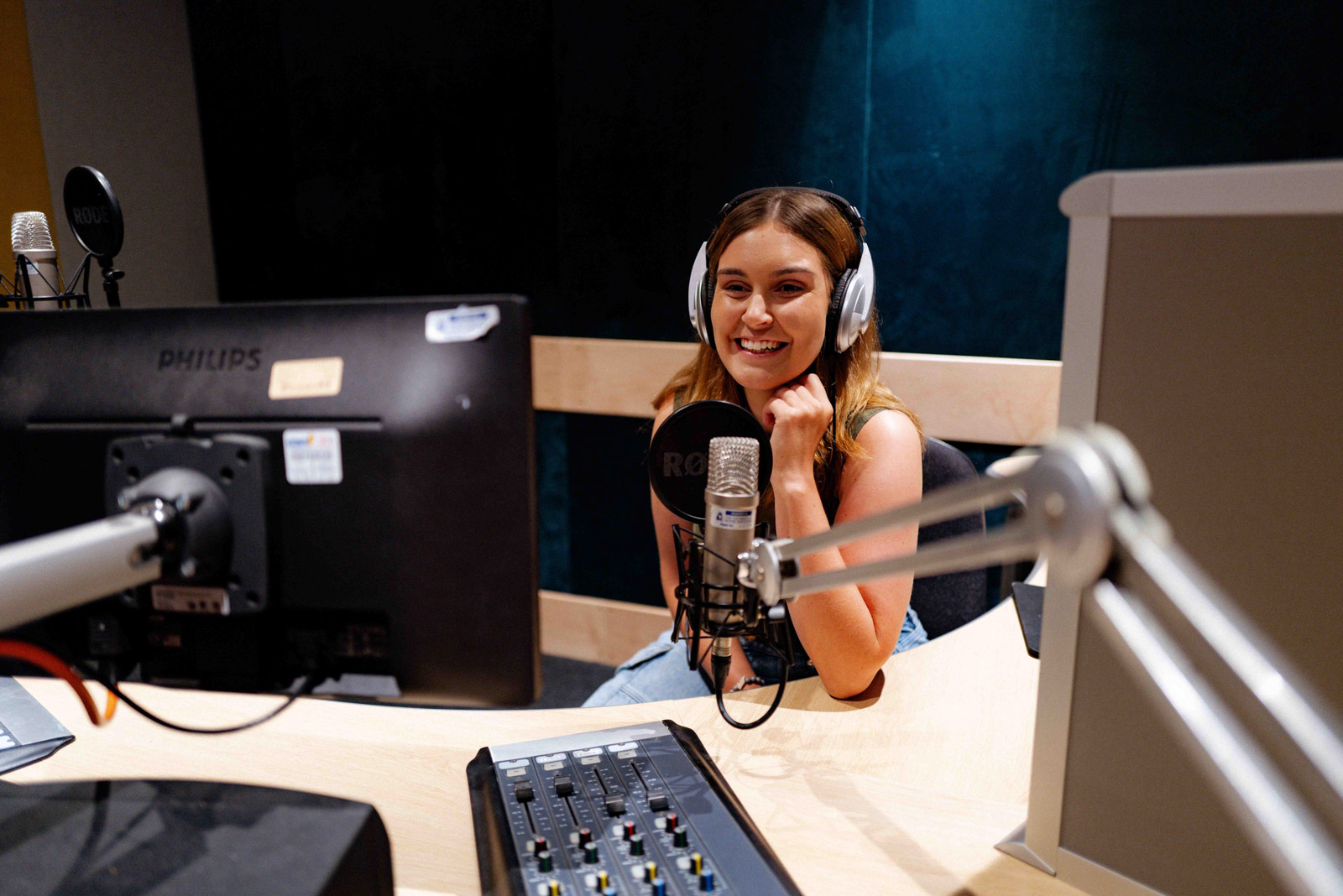
"Meeting an actual client and have that connection has given me so many ideas and much more of an understanding into the project as a whole. It was really interesting to see a charity behind the scenes, I have never experienced that before, it gave me such a better understanding of their work."