
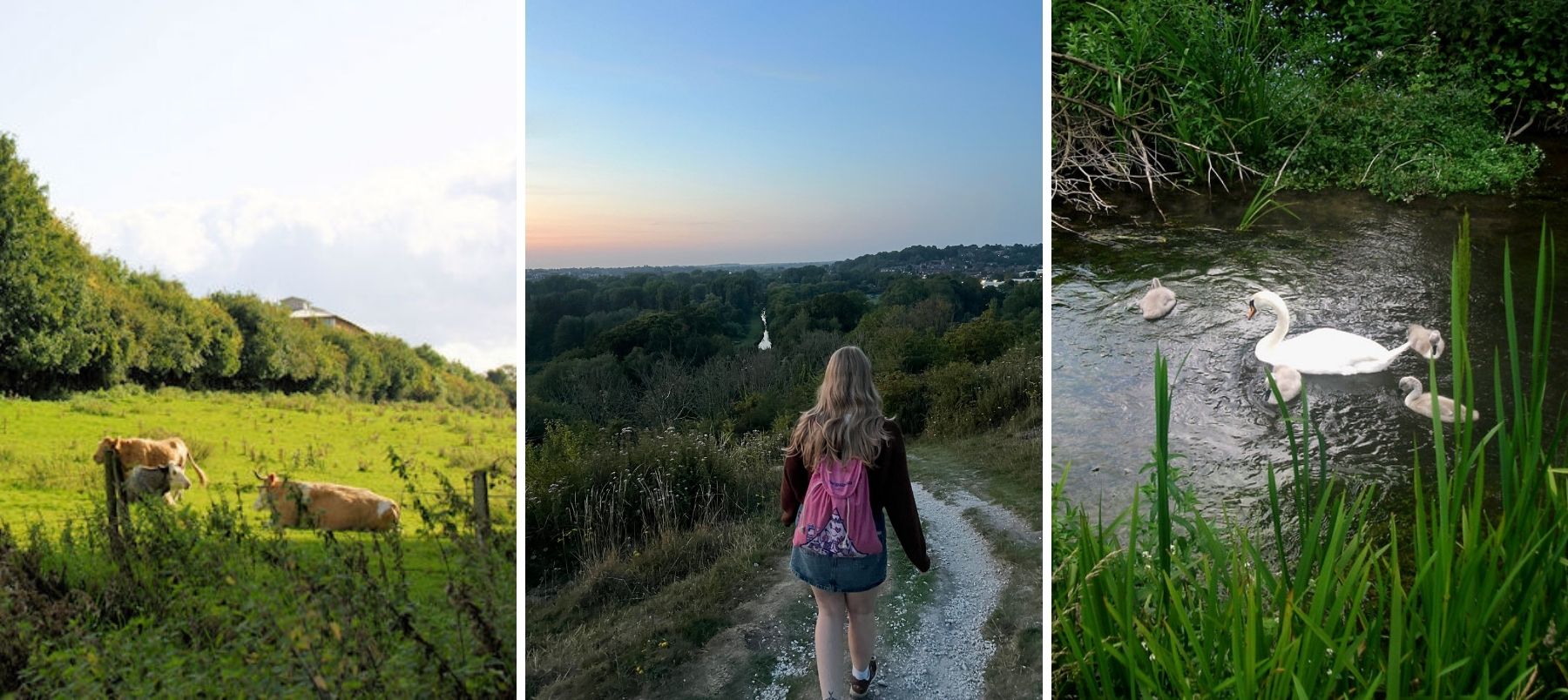
When discussing the most special aspects of living in Winchester, I’d argue that the scenic natural beauty of the city ranks amongst the highest in the country, with vast woodland and farmland alongside the Itchen river. To current and incoming University of Winchester students, being aware of what the city has to offer is important to having an amazing experience here. Here are my top 5 nature walks in Winchester, and why these walks should be experienced by everyone!
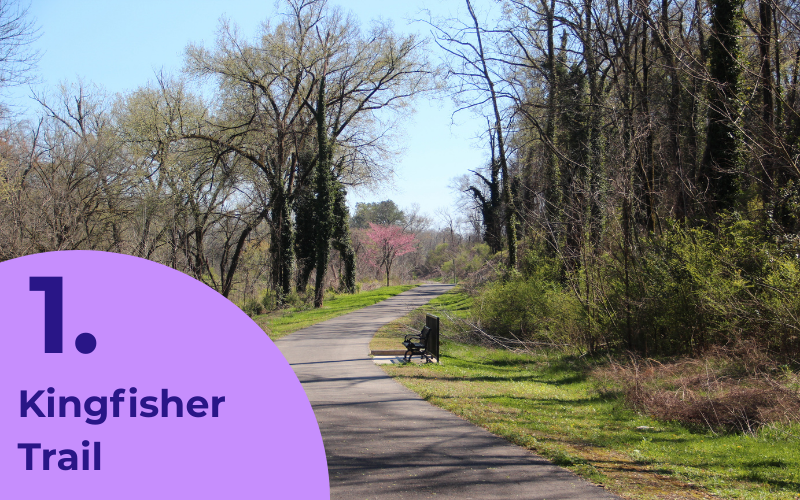
In my opinion, the most peaceful and scenic nature walk in Winchester is the Kingfisher trail. Not only is it more tucked away than other more popular trails, but it encompasses streams and fields, as well as beautiful historical architecture. In my opinion, this trail is best enjoyed during both the spring and autumn months, when the weather is not too hot but the risk of wading through mud is relatively low.
One of the most special aspects of the Kingfisher Trail is its pathway through Compton Lock, a beautiful body of water that is extremely popular for wild swimming during the spring and summer months. Additionally, the surrounding areas are excellent for bird watching, and deer are frequently spotted. The Kingfisher Trail leads onto Twyford Down Cutting, a historical area on the trail dotted with Iron Age memorabilia stones and weaponry.

Potentially the most well-known nature walk in the Winchester area, this ancient hill, covered with a variety of woodland and grassland habitat, is a perfect walk for those who desire a scenic view of the city, as well as a physical challenge in climbing a reasonably steep slope- especially for inexperienced walkers. With a steep climb of approximately 250 meters, some effort is needed but, in my opinion, it is worth the work!
In addition to the natural beauty, St. Catherine’s hill holds a rich history dating back to the Iron Age, with remnants of where a hillfort once was sitting at the very top, near some picturesque trees. For aspiring history students in Winchester, seeing first hand some of the country’s richest history can be an awe-inspiring experience, providing context to the foundation of England’s first capital city.
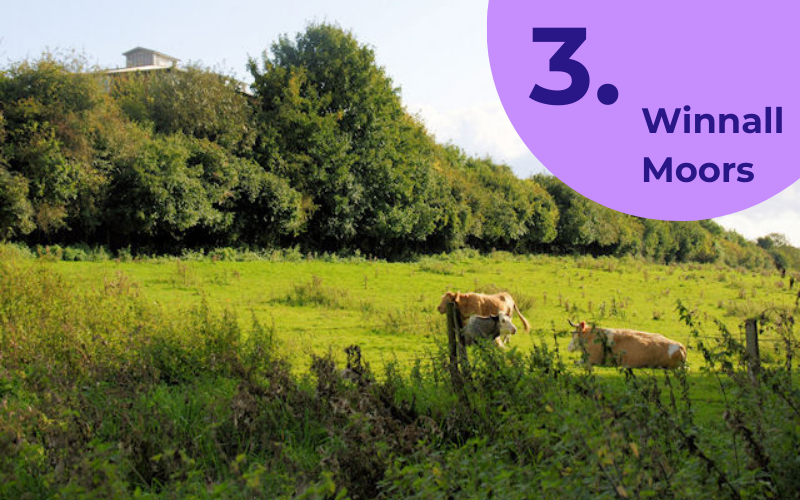
Third on my list is the Winnall Moors, a nature reserve pathway that weaves through a more undisturbed area of Winchester, encompassing some of the best areas in the city for birdwatching, with sought out species such as kingfishers, ospreys, and sandpipers being frequently spotted in the area.
With a variety of different walks such as the Water Vole Trail, the circular trail and the 4.5 mile-long Itchen way walk throughout the national park, walkers can decide which walks are suitable to their abilities, with each pathway providing a different view into how ecosystems in Winchester work. In addition to the wildlife, the streams that run through the walk are made of chalk streams, a rarity in modern England. Students with an interest in geology would find an interest in these streams, as they are being wiped out due to construction projects, as well as climate change.
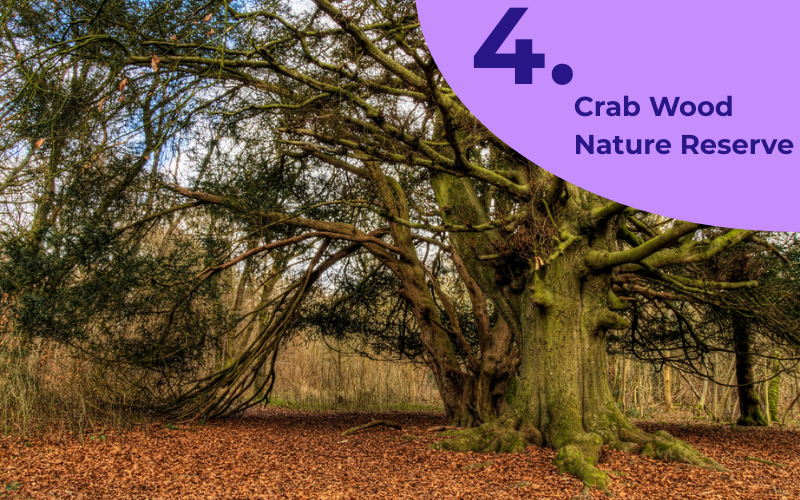
For fans of ancient woodlands, Crab Wood Nature Reserve is the top-rated site in the Winchester area. Located near Sparsholt, the woodlands are a popular dog walking location as well as a popular location for photography.

The final nature walk in Winchester on this list is the Itchen Way. It leads all the way from Winchester to Southampton, with several beautiful pathways along the 30 kilometre route. This walk is excellent for experienced hikers and walkers who need a real challenge and are willing to wade through mud and shrubs to get a true outdoorsy experience.
This blog was written by Max Dobson, a LLM Law Conversion student.
Back to blog