
Winchester's city centre is full of history hiding in plain sight - here are eight of our favourite spots and the stories behind them if you ever want to take a tour through history.
Stop 1: The story behind the St Alphege building
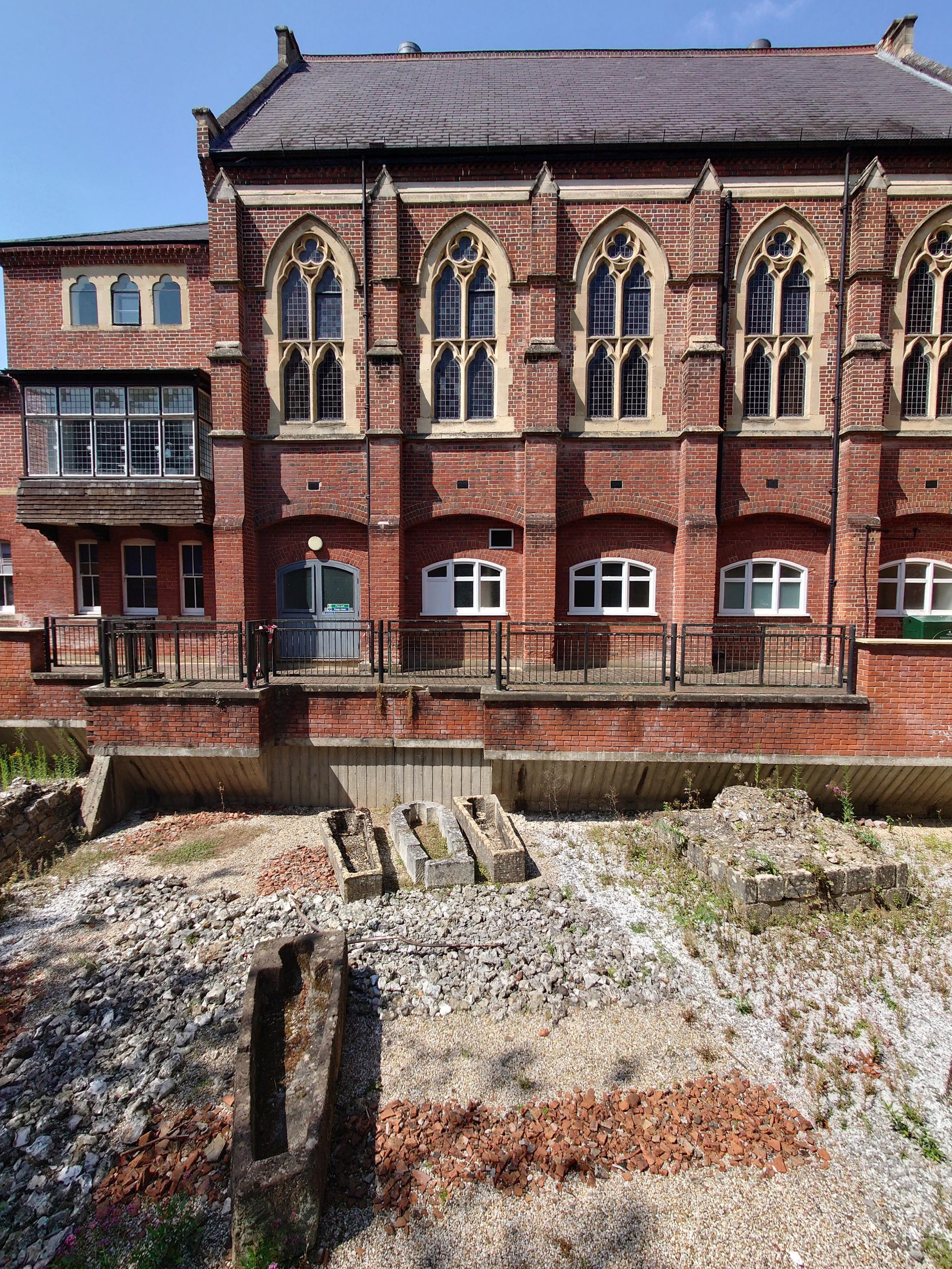
One of our campus buildings is named after one of Winchester's most significant saints. St Ælfheah (pronounced Alphege) was an Anglo-Saxon Bishop of Winchester who later became Archbishop of Canterbury in 1006. He sacrificed himself to protect his people from Danish attacks, and his death was regarded as martyrdom; he was canonised in 1078. When his body was moved in 1105, it was found to be incorrupt, which further confirmed his saintly status.
Stop 2: Castle behind the chocolate shop
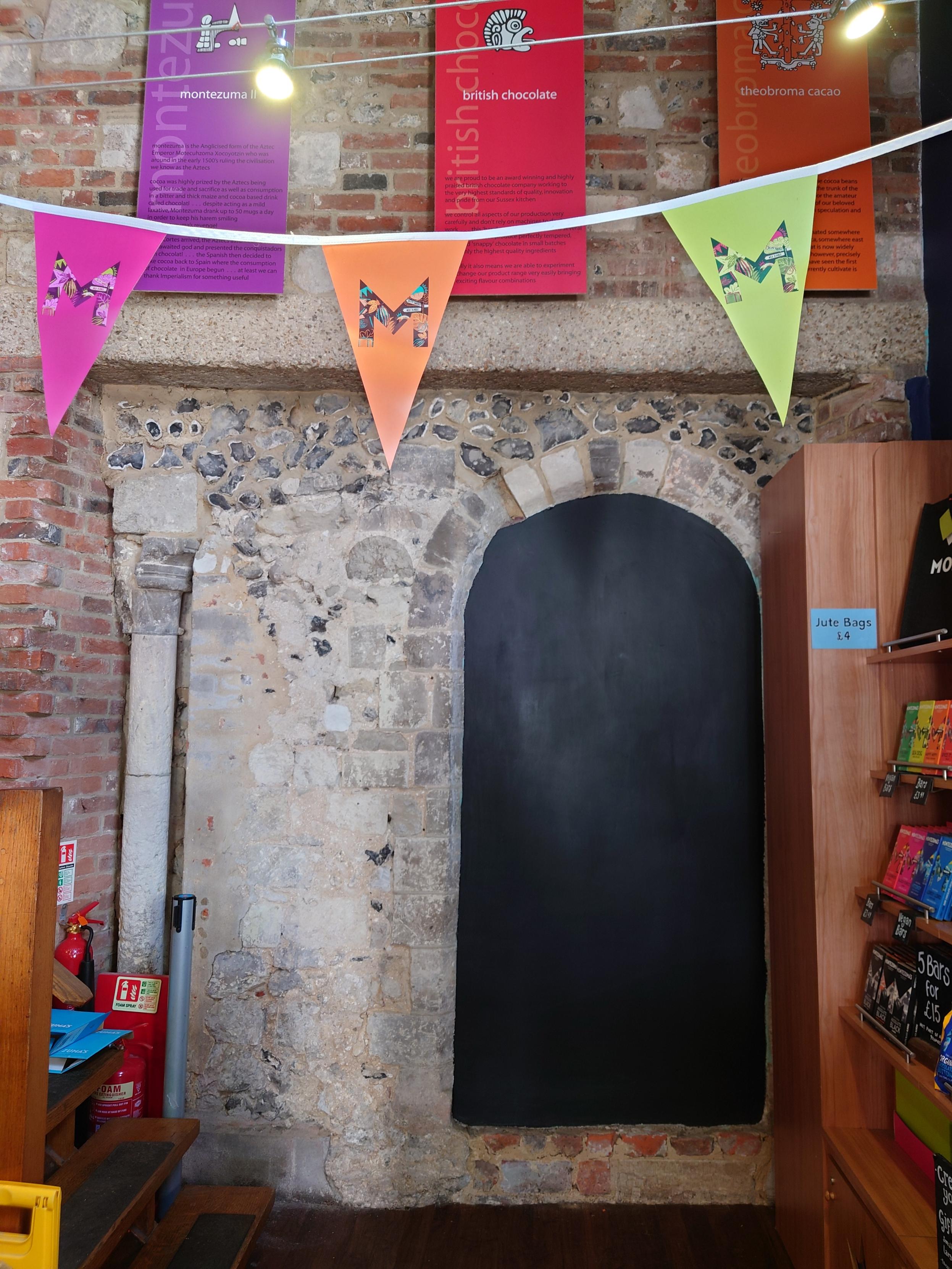
The back wall of Montezuma's chocolate shop was originally part of William the Conqueror's castle, built in the eleventh century, and it also incorporates a Roman column dating from 40 CE, meaning that within a single wall, you can see the work of two conquerors separated by roughly a thousand years.
Stop 3: Heaven and Hell
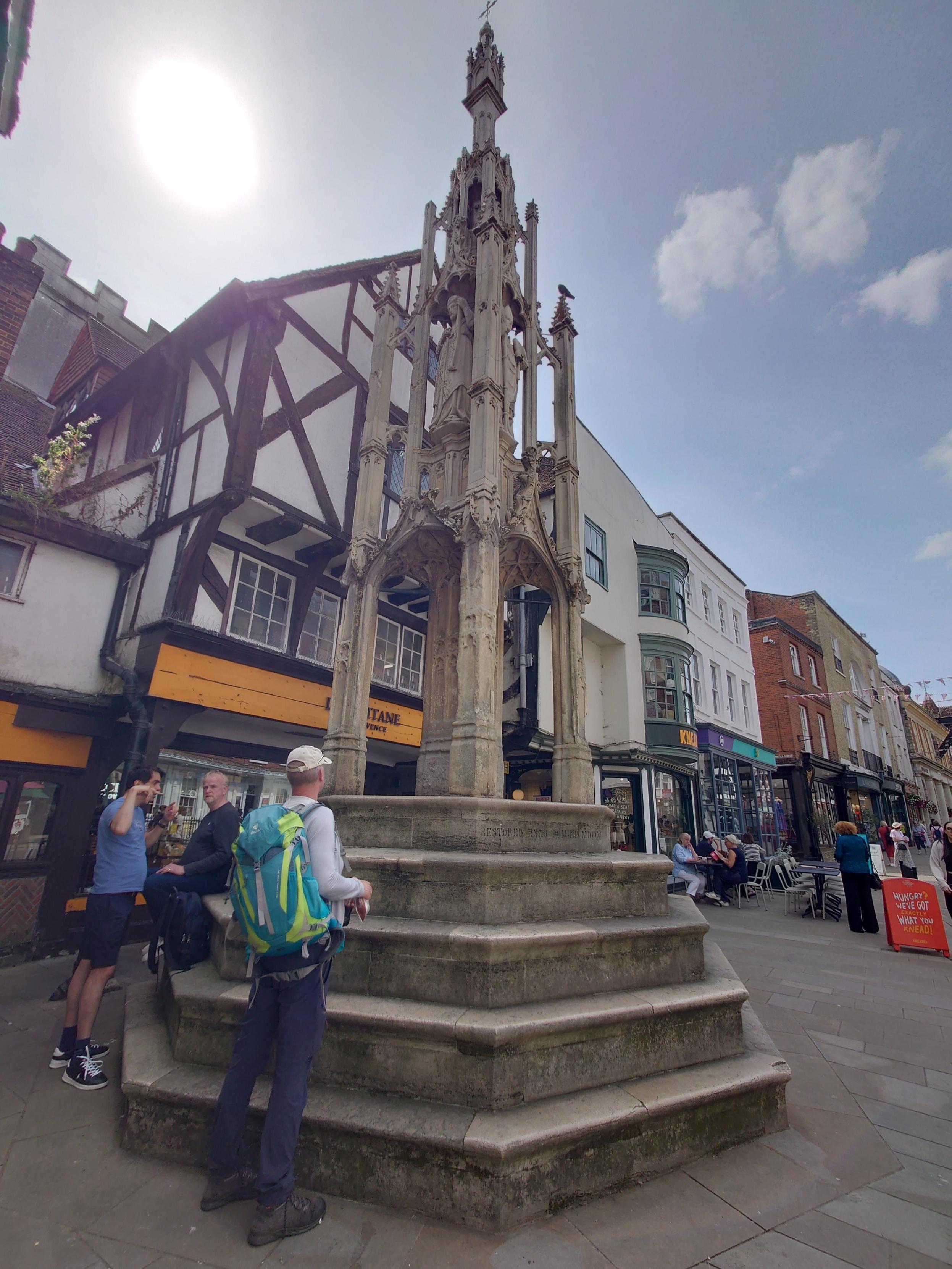
Where L'Occitane currently stands, next to the Buttercross and Montezuma's, there once stood two neighbouring medieval taverns called Heaven and Hell. I wonder how different the interiors of these pubs looked.
Stop 4: What is The Buttercross?
The Buttercross is Grade II listed and was originally built in the mid-fifteenth century. It is a holy cross that also served as a market cross, where locals gathered to sell their produce, and it gained its name from its association with the sale of dairy produce. It has stood proudly in Winchester since the fifteenth century, with locals famously protesting when it was sold in 1770.
Stop 5: A church behind the bins
The foundations of the medieval parish church of St Peter's can still be seen behind ASK Italian. St Peter's was one of many parish churches within medieval Winchester and would have served as a place of worship for locals, as well as a meeting place for the butchers' guild. It is located on St Peter's Street, previously known as Fleshmongestret — meaning 'street of the butchers' — from around the 1290s.
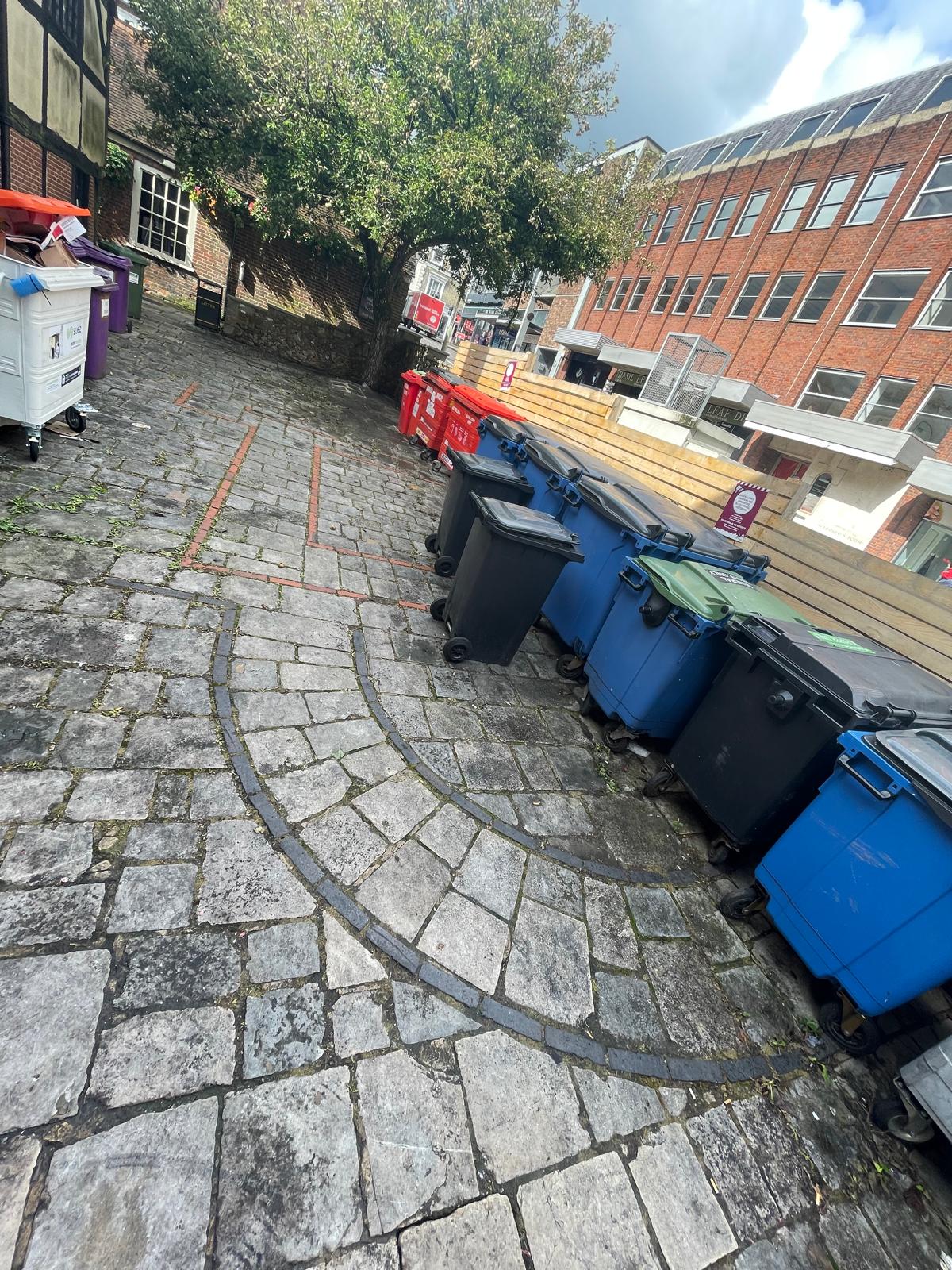
The foundations of the medieval parish church of St Peter's can still be seen behind ASK Italian. St Peter's was one of many parish churches within medieval Winchester and would have served as a place of worship for locals, as well as a meeting place for the butchers' guild. It is located on St Peter's Street, previously known as Fleshmongestret — meaning 'street of the butchers' — from around the 1290s.
Stop 6: The right to water
In 1299, a woman was left without access to water for her launderette after it had been obstructed by local men, including the Mayor of Winchester. She went directly to King Edward I with her complaint, and he consequently ordered an investigation, declaring that 'water has always been common'. This led to the right to water being enshrined in statute law rather than common law, meaning that blood, dye, and sewage were no longer permitted to contaminate the water supply. King Edward's declaration is cited in the United Nations Convention on Human Rights to justify the principle that water is a human right to this day.
Stop 7: A cathedral with no spire
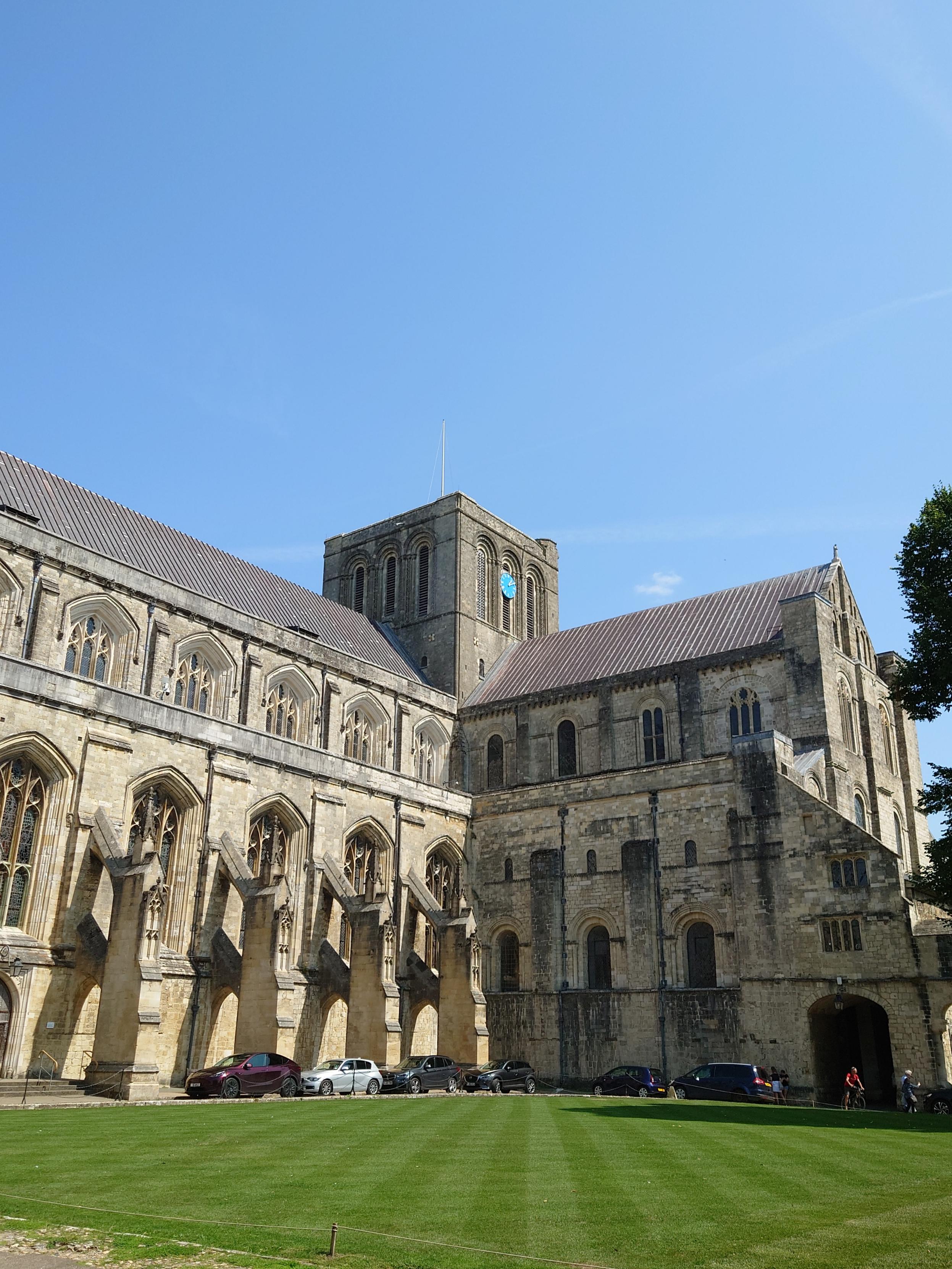
Winchester Cathedral was built between the eleventh and sixteenth centuries and has many legends surrounding it. The cathedral originally had a tower, which collapsed in 1107 — an event widely viewed as a bad omen. In 1100, King William Rufus had become the last English king to be buried there, and many believed God had struck down the tower in anger at his burial there. The tower was rebuilt shorter for greater structural support, and as a result no spire was ever added. Although Winchester Cathedral has the longest nave in medieval Europe, it is noticeably short without a spire reaching skyward as most medieval cathedrals did.
Stop 8: Alfred's legacy
The Nunnaminster was founded as a centre of learning and the arts by Alfred the Great's wife, Ealhswith, in 903 CE. It was rebuilt and extended several times, including after the Norman Conquest, when it was rededicated to St Mary and St Edburga. By the sixteenth century it was home to 26 nuns and 102 people in total. All that remains today are these ruins, with Abbey House and Gardens now standing on the rest of the site.
Written by Rebecca, a Medieval History student.
Disclaimer: We haven't rigorously checked the sources on the above blog, so for anything more serious than a pub quiz, we'd recommend a trip to the library to check for yourself!
Back to blog