A postgraduate student at the University of Winchester has created an interactive map highlighting heritage sites in his native Zimbabwe which he believes are under threat.
Taurai Mudzudza, who is pursuing a Master’s in Cultural Heritage and Resource Management (CHARM), is passionate about protecting his homeland’s vast cultural legacy. He is particularly concerned about an apparent lack of attention given to lesser-known sites by the National Museums and Monuments of Zimbabwe (NMMZ), the statutory body responsible for managing the nation’s heritage, and the National Trust of Zimbabwe.
During the summer Taurai had a placement with the Earth Museum – a virtual space which creates digital interactive maps highlighting the world’s heritage treasures and their associated stories – and they helped him create the map of at-risk sites.
While Zimbabwe boasts five UNESCO World Heritage Sites, including the iconic Great Zimbabwe – a remarkable stone city built by the Shona people between the 11th and 15th centuries – Taurai believes that the spotlight often falls only on these internationally recognised landmarks, leaving many smaller but equally significant sites in the shadows.
“These sites may not be major tourist attractions, but they hold deep historical, cultural, and spiritual significance for local communities,” said Taurai. “Neglecting them risks erasing important aspects of our identity and heritage.”
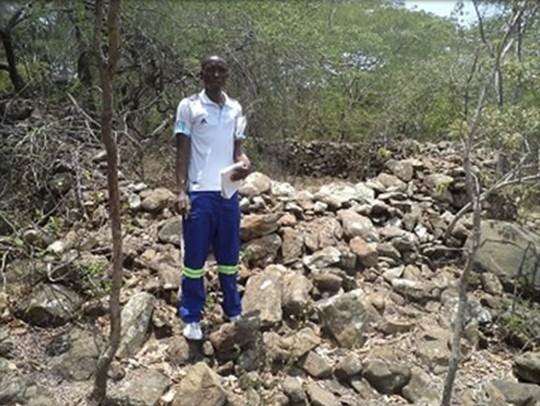
He cites sites such as the Kagore Cultural Landscape in Nyanga (pictured), Murahwa’s Sacred Hill in Mutare, Mahwemasimike Sacred Site in Mutasa, and others in the Mutoko District as examples of culturally rich locations facing destruction, particularly from expanding black granite mining operations by Chinese companies.
These sites feature a unique blend of human-made and natural heritage – including ancient terraces, stone structures, rock art, and sacred flora and fauna – and continue to serve as sacred spaces for rain-making ceremonies and ancestral rituals.
Taurai, who was involved in developing the Zimbabwe Secondary Schools Heritage Studies Syllabus, also highlights the growing impact of unregulated activities at heritage sites, particularly by some Apostolic Churches who use these sacred spaces for open-air services.
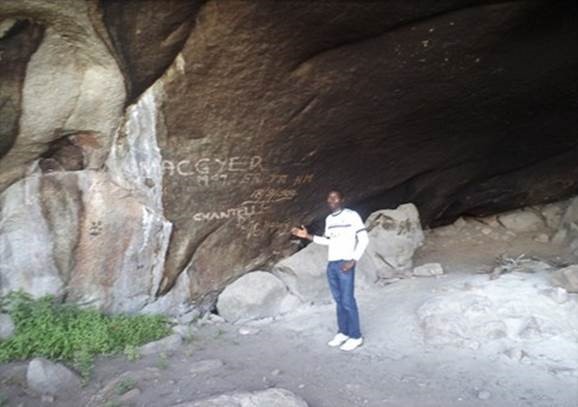
He notes that these groups often ignore customary protocols, which results in damage to stone structure, littering, and the removal of trees – all of which threaten the integrity and authenticity of the sites.
To address these challenges, Taurai is advocating for a stronger, community-based approach to heritage management. He believes that local traditional leadership—including Chiefs and Village Heads—should be empowered to oversee and protect these sites, as they are not only custodians of cultural knowledge but also deeply connected to the sites’ spiritual significance.
“There must be a shift towards recognising and involving communities who live with and care about these places,” he said. “Without this, we risk losing them entirely.”
Professor Niall Finneran, who runs the CHARM programme, said: “Taurai has been a real asset to the MA programme and indeed the University too. He brings a different perspective to heritage than one that perhaps many of our students are used to, and this is what we are all about: different perspectives and changing perceptions.
“I am sure Taurai will be able to take the skills he has learned here in CHARM and really make a difference back home in Zimbabwe.”
Janet Owen, founder and executive director of The Earth Museum, said: “Taurai’s skills and knowledge have been really helpful in developing this new map and content. He’s the first person we’ve had at the museum to connect with this subject area.”
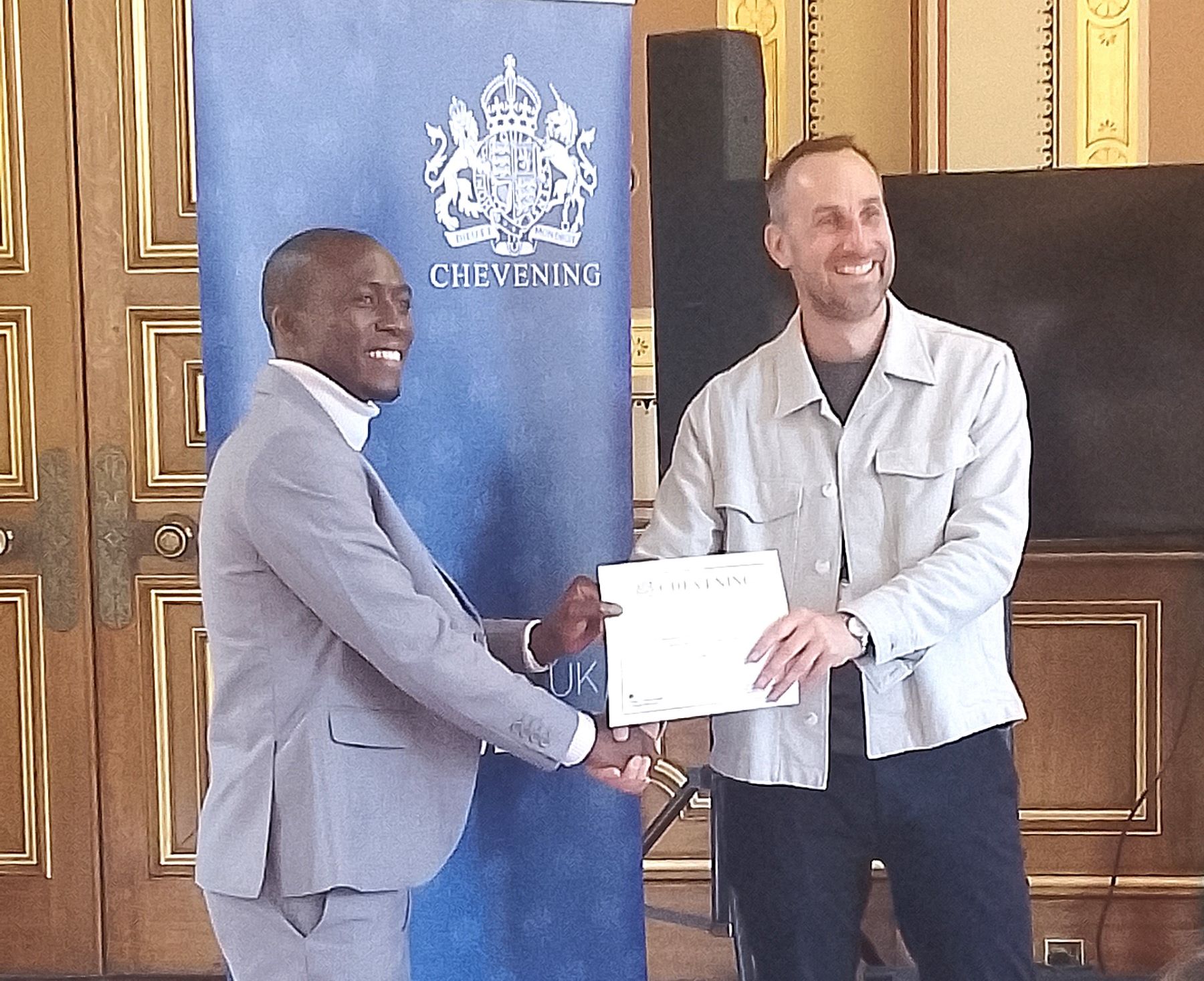
Taurai’s academic journey began with a degree in Archaeology, Cultural Heritage and Museum Studies from Midlands State University and graduated in 2012. He later earned a Postgraduate Diploma in Education from the Zimbabwe Open University in 2017.
A former secondary school teacher, Taurai played a key role in developing the Heritage Studies syllabus for Zimbabwe’s national curriculum (2015–2022).
He has served for over 11 years as Heritage and Geography Teacher in Mutare, Manicaland Province, and recently completed six years as the Manicaland Province Heritage Panel Chairman for the Zimbabwe Heritage Panel Association
Inspired by the work of Professor Niall Finneran, leader of the CHARM programme, Taurai chose to further his studies in Winchester.
Taurai is a Chevening Scholar – an award offered by the UK government to future global leaders – and recently received a Chevening Bronze Award (pictured) for his volunteer contributions to Hampshire Cultural Trust and the Earth Museum. He also serves as an International Student Ambassador at the university.
He completed his Chevening-sponsored online short course titled Key Essentials: Trade Rules, Sustainable Development and the Law in June 2025 with the University of Cambridge, UK.
Taurai hopes to apply his academic learning to real-world challenges in heritage preservation. He is particularly interested in the use of digital tools to document, present, and interpret heritage sites. He is currently working on plans to digitally record under-documented sites in Zimbabwe and create virtual experiences to improve public awareness and academic engagement.
“My goal is to bring visibility to these hidden heritage gems and to advocate for policies and practices that ensure they are valued and protected,” he said.
Upon completing his studies, Taurai plans to return to Zimbabwe and work within the country’s heritage sector. He hopes to contribute to a future where all of Zimbabwe’s heritage – both celebrated and overlooked – is given the recognition and protection it deserves.
Several students on the University of Winchester’s CHARM course have undertaken remote placements with the Museum, based o the Isle of Wight, over the last five years. Students have benefited from a different type of heritage experience.
One of its intended longer-term applications is for students to take a subject of interest to them and relevant to their degree, and develop digital mapped content to share around a particular theme or story.
Other maps created by University of Winchester students include Sandee Kaur’s Whispers from the Golden Dome, Saman Ishfaq’s Shipwrecks of the Atlantic Ocean – Shadows of the Deep and Latika Chandela’s The Three Friends: a story of survival.
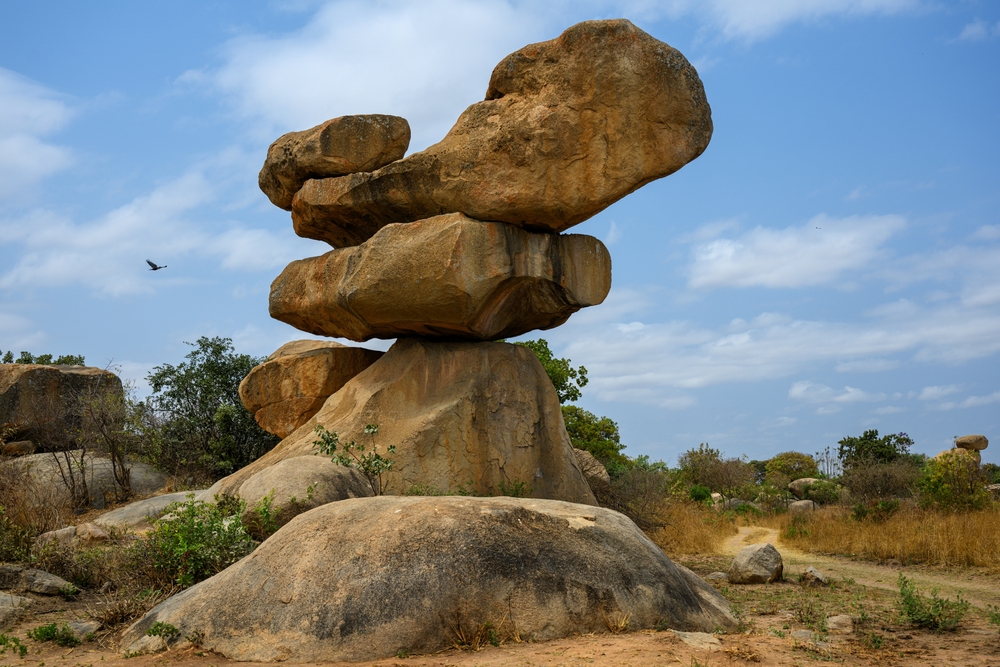
Pictured top: Flying Boat Rock is a natural, boat-shaped boulder formation at the Chiremba Balancing Rocks in Epworth, near Harare, Zimbabwe
Back to media centre