-NF-ponies-web.jpg)
The New Forest's own brand of English sets it apart from the rest of Hampshire and shows a rich range of influences, writes Christopher Mulvey, Emeritus Professor of English at the University of Winchester.
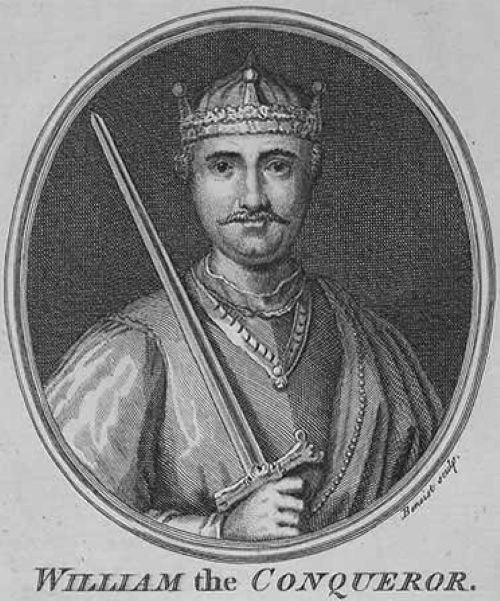
New Forest English differed from Hampshire English because of words of Norman French, Angevin French, and Romani origin. There is reason to think that New Forest English preserved an older form of West Country English because the whole great area had been agriculturally and economically isolated when, in 1079, William the Conqueror seized land from Southampton to Bournemouth and made it a Royal Forest.
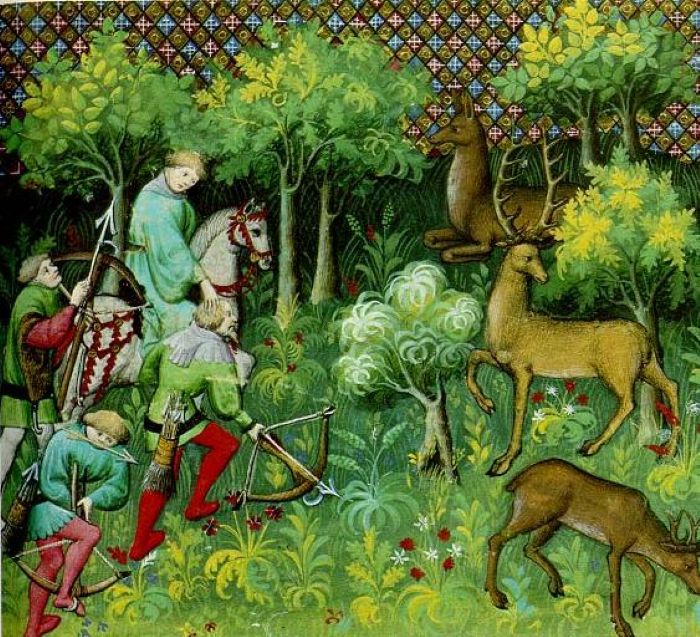
He ‘laid down a set of Forest laws to protect the deer and other animals.’ What William meant by ‘forest’ was a tract of open land in which animals could roam free from fencing. Much of it might be treed but by no means all. In William’s New Forest, there lived many Saxons whose lives and livelihoods were until 1079 no different from those of the Saxons living elsewhere in Hampshire.
In protecting, ‘the deer and other animals’, William protected, if ‘protected’ is the right word, Saxon New Foresters from the agricultural changes of the next centuries. Elsewhere in Hampshire, tree-clearing continued in Norman times, strip-fielding expanded in medieval times, enclosures intruded in Elizabethan times, intensive agriculture spread in modern times. In the New Forest, agricultural, social, and linguistic change went at a slower rate.
By turning New Forest land into his land, William deprived the inhabitants of their property. In compensation, new rights were introduced. The rights were called Common Rights, and New Foresters with those rights came to be called commoners.
From among the commoners, there were appointed verderers ‘sworn to maintain and keep the assises of the forest, and also to view, receive, and enrol the attachments and presentments of all manner of trespasses of the forest, of vert and venison’. ‘Verderer’ was a word taken from Norman French; it derived from Latin viridis - green. An ‘assise’ was a court in which men sat, without a judge, to reach a verdict based on their own investigation. ‘Assise’ came from Old French and was derived from Latin adsidēre – to sit together. ‘Vert’ was ‘green vegetation growing in a wood or forest and capable of serving as cover for deer’. Like ‘verderer’, it too derived from viridis. ‘Venison’ was the flesh of any animal hunted and killed for food. It derived Latin venari – to hunt.
Each section of the forest had an ‘agister’ (another Norman French word) who ensured that ‘agistments’ – payments - were made if livestock were pasturing on another commoner’s land. Agisters were needed because the New Forest was a fenceless area where cattle roamed at will, raising problems of ‘assart’, ‘inclosure’, ‘perambulation’, ‘purlieu’, and ‘purpresture’. Those were not problems with which regular courts engaged, and a Verderers’ Court was established to deal with the peculiar business of the New Forest.
Charter of the Forest
In 1217, a Carta Foresta - ‘Charter of the Forest’ – reinforced commoners’ rights to pasture, sheep, mast, marl, estovers and turbary. Those were the rights to graze ponies, cattle and donkeys, to graze sheep, to turn pigs out in the autumn to feed on acorns (mast), to take clay (marl) for fertilizer, to collect firewood (estovers), and to cut turf (turbary) for fuel. A Court of Swainmote - a meeting of swineherds - was established to assemble the commoners three times a year to bring forward matters of concern. The Charter of the Forest, issued very shortly after the Magna Carta, applied to all the royal forests. The New Forest was, however, the very largest, and it was within the New Forest that a special speech developed.
The Normans spoke their own version of French, and that was the language of the kings of England up to 1154 and the death of Stephen, the last Norman king. Later kings of England spoke Old French, the predecessor of Modern French. At the time that William created the New Forest, the language of its inhabitants was West Saxon English. The New Foresters, starting with West Saxon and adopting over three centuries an idiosyncratic mixture of Norman French and Old French, began to develop an English of their own, an English that called New Forest Commoners’ English.
The commoners themselves called their speech ‘New Forest’, and they continue to do so. New Forest includes words like ‘bennet’, ‘fessey’, ‘grey’, and ‘milkmaids’. ‘Grey’ and ‘milkmaid’ look familiar, but, in the New Forest, a grey is a badger, and milkmaids are cuckoo flowers. ‘Bennet’ is a West Saxon word for an old grass stalk, and bennets are used to weave baskets and mats. ‘Fessey’ comes from an Old French word ‘fesse’ meaning a band on a coat of arms. People were proud of their ‘fesses’, and, in the New Forest, ‘fessey’ means ‘proud’, ‘upstart’.
New Forest English shares many words with the West Country dialects, but it is not only the Norman and Old French vocabulary that distinguished it. A further source of New Forest English was Romani, the language of the Roma. In the New Forest, ‘hedge’, ‘sheep’, ‘pheasant’, ‘pig’, ‘swede’, and ‘bird’ become ‘baa’, ‘bakra’, ‘ballo’, ‘canny’, ‘chimp’, and ‘chiriclo’. ‘Engro’ is Romani for man, and, in the New Forest, ‘shepherd’, ‘traveler’, ‘horse trader’, ‘woodsman’, ‘dancer’, ‘linguist’, ‘farrier’, and ‘forester’ become ‘bakra-engro’, ‘dromengro’, ‘girfengro’, ‘harlengro’, ‘killimengro’, ‘lavengro’, ‘petulengro’, and ‘weshengro’.
Influence of Romani
For everything and anyone for which and whom New Foresters have adopted Romani words, West Country English already had a word. Why then adopt Romani words? The explanation might be in the special nature of the commoners’ community and the special life of the Roma. From the eleventh century onwards, Norman law effectively isolated the New Foresters, leading them to develop their own ways. Other English people left them alone. In the long history of the New Forest, there was only one group of people who penetrated the forest and engaged in daily contact with the foresters. Those people were the Roma.
The date of the Roma’s arrival in Britain can be estimated at about 1500, some years before the Egyptian Act of 1530. That act was directed at ‘outlandish people calling themselves Egyptians using no craft nor feat of merchandise, who have come into this realm, and gone from shire to shire, and place to place, in great company; and used great subtlety and crafty means to deceive the people’. The Roma did not in fact call themselves Egyptians. That was the name given them by Europeans who thought the Roma came from Egypt. From being called Egyptians, they came to be called Gypsies: a term ‘intensely disliked by some Roma,’ says Ian Hancock, ‘and tolerated by others.’
Their language, Romani, is a North Indian language, and the Roma had wandered all the way from India. They were people who came and went. They did not want land and they did not want women. As a result, they were not seen as invaders but as interlopers. They got into conflicts, but they did not get into battles. Their camps were not welcomed, but they were periodically tolerated. They lived at the edge, moving with the seasons and when prejudice became persecution.
The Nevi Wesh, as the Roma called the New Forest, was especially suited to their way of life. A huge, unfenced, underpopulated wildness was a place where other travellers got lost, but where the Roma found themselves at home. For the New Foresters, the Roma were a contact with the outside world. They brought trades and crafts and skills that country people valued. They brought variety and excitement. The result was a continuing, if limited, interaction between commoners and Roma. With that came an exchange of languages. By some counts, a third of the words special to New Forest speech have come from Romani - so many words that New Forest Commoners’ English can be called a form of Anglo-Romani. A match to Anglo-Romani is Pogadi Chib, Romani for ‘broken language’. Pogadi Chib combines English grammar and syntax with Romani vocabulary; it is spoken by Roma in England who no longer know Romani.
George Borrow was a student of Romani, and a man who taught himself a new language every summer until he knew some forty. He learned his languages reading the Bible in whatever language he next planned to go preaching. Since there was no Romani Bible, Borrow went to live with the Roma to learn their language and make a translation. He became such a fluent speaker that the Roma called him ‘Lavengro’ – Language man - and that became the title of his semi-fictional autobiography published in 1851. One of his final publications was Romano Lavo-lil: Word-Book of the Romany. In the hundreds of years of interaction with the people the New Foresters call Romanichals, New Foresters adopted many words from the language they call Romanes.
The outside world encroaches
The linguistic isolation of the New Forest was never total, and, in recent centuries, it has steadily been eroded. The eighteenth century saw toll roads. The nineteenth century saw railways. The twentieth century saw motor roads. The car opened the New Forest to the world. Weekend visitors invaded, and they have been blamed for eroding New Forest English. The work that Jo Ivey has done to create a New Forest Dictionary is evidence for and against the continuation of the old speech. When people start collecting local words, it can be a sign that the local words are disappearing. The fact that there is a body that calls itself the New Forest Commoners’ Defence Association is a similar mixed signal. At the same time, the Verderers’ Court to this day keeps alive the singular legal language of the New Forest.
New Forest English has always been marked as distinct from the West Country English that John Yonge Akerman said was the same dialect ‘with modifications’ that prevailed ‘among the rural population of the counties of Devon, Dorset, Somerset, Hants, Wilts, Berks, Hereford, part of Warwick, and even Surrey, Sussex, and Kent.’ It was generally accepted, and generally true, that there was a similarity of dialect from Kent through to Devon. However, that was not necessarily how it seemed to the peoples of those counties themselves.
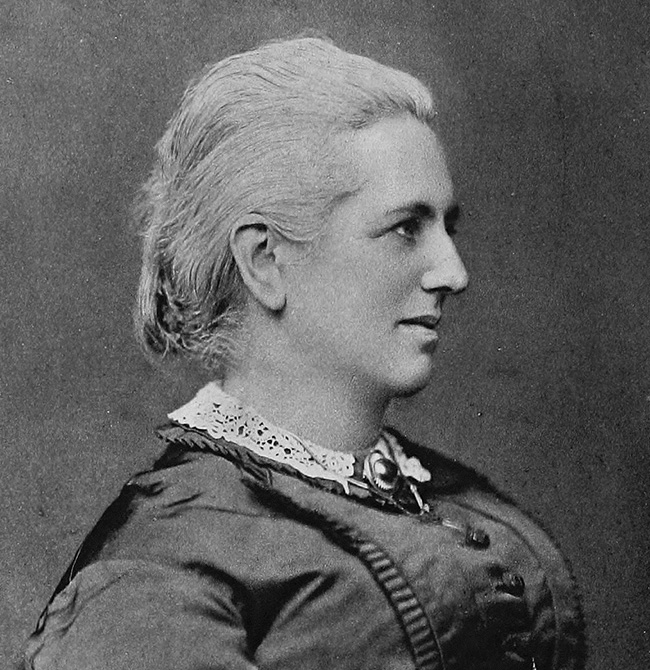
Charlotte Mary Yonge (pictured), prolific novelist, Hampshire woman, devout Christian, and possibly a relative of John Yonge Akerman, provided, in John Keble’s Parishes, a Chapter XV, ‘Words and Phrases’ on Hampshire English. The speech of the older generation speech was, she said, ‘characteristic of the genuine West Saxon’. It was ‘slow, and with a tendency to make o like aa.’ However, a Hampshire man, she testified, ‘going into Devonshire was told, “My son, you speak French.”‘ To the ear of the villagers, the speech of one West Country county was distinct from the speech of another West Country county.
Fears for the old accent
A fear expressed by both William Henry Cope and Charlotte Mary Yonge was that the old Hampshire accent was being lost. Cope blamed the board schools introduced by the Education Act of 1870 and the influence of London English. He marked a number of his entries ‘N. H.’ - North Hampshire, for words and meanings found in the north-east corner of the county, words invading from Berkshire and Surrey. Yonge blamed ‘the schoolmaster’ and ‘the influx of new inhabitants’. Fears about dialect loss were both justified and overstated. Education and migration brought changes, but changes had been happening for a thousand years. Language change through generational drift is a slow constant, but extraordinary events can speed that change. World war and population movement brought even greater change to Hampshire English in the twentieth century than in the nineteenth century.
In 1944, John Henry Forshaw and Patrick Abercrombie prepared a County of London Plan for the British Parliament to provide a solution to the overpopulation of London and the housing crisis created by German bombing. The Forshaw-Abercrombie solution was the ‘overspill town’. London’s excess population was to be ‘decanted’ into expanded old towns and constructed new towns. Parliament agreed.
Between 1946 and 1969, nine New Towns Acts were approved and London families were moved into surrounding counties. In Hampshire, two towns – Andover and Basingstoke – were expanded. A new population filled Hampshire schools with London children. One child moved to a new school adapts her accent to the accent of her classmates, but groups of children behave differently. In Andover and Basingstoke, in that part of the county that William Henry Cope had called ‘North Hants’, Hampshire and London children began to talk like each, mixing their dialects.
However, the London effect on North Hants English can be overstated. John Arlott, cricket commentator and once the most famous of West Country speakers, called his autobiography, Basingstoke Boy, because he was brought up in the then pretty market town in the first decades of the twentieth century. The fact that Arlott was born so far to the north of the county shows the range and strength of the West-Country accent before the arrival of Basingstoke’s London overspill population in the 1960s.
Christopher is a graduate of Magdalen College, Oxford. He received his PhD from Columbia University. His articles are numerous, and his books include Anglo-American Landscapes (1983) and A History of the English Language in 100 Places (2013). He is a Trustee of the English Project.
Back to media centre