
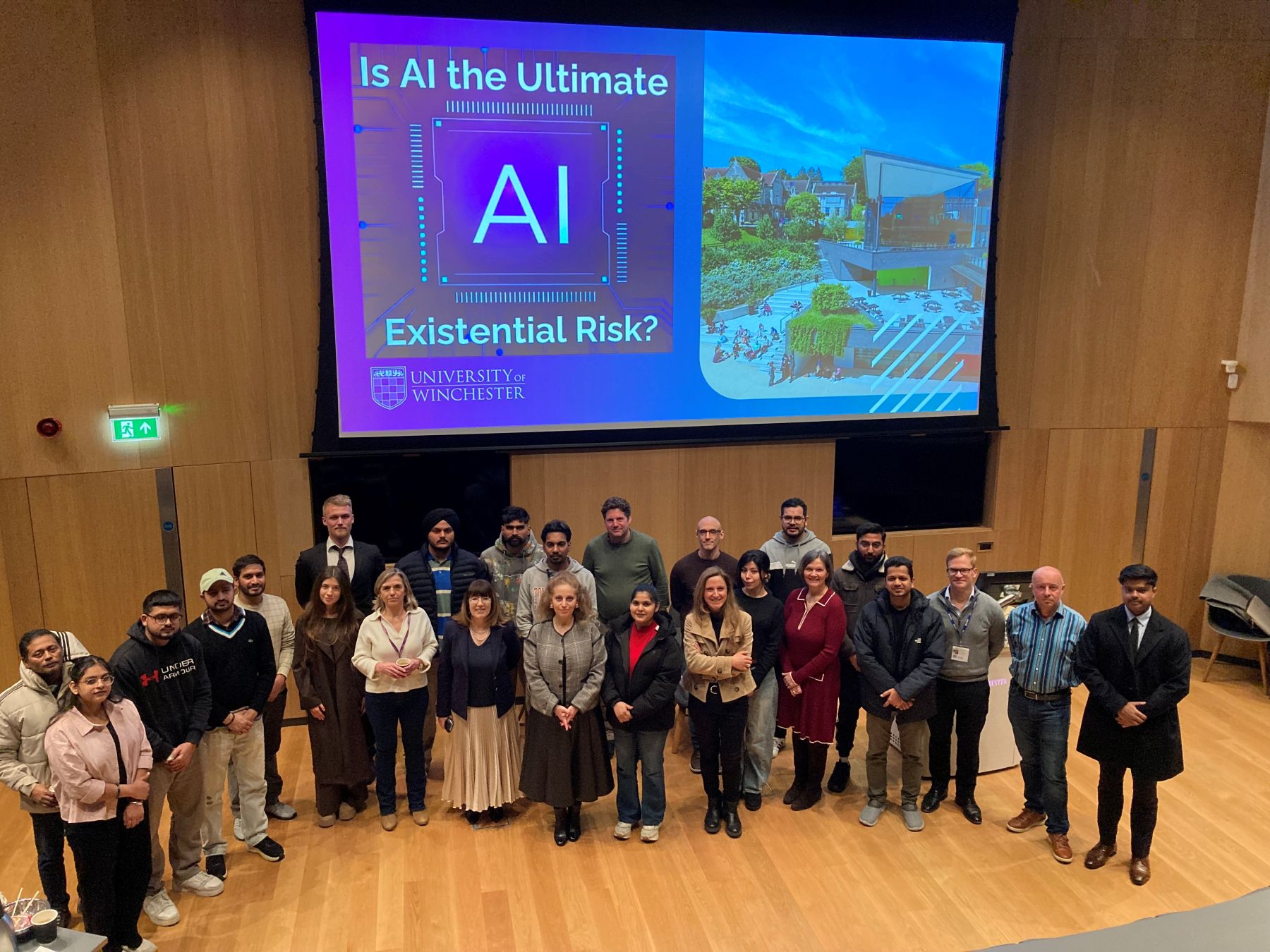
While AI’s power and reach grows by the day the technology still needs ‘a human in the loop’ to identify and solve problems for it to work effectively.
That was the main message to come out of an event at the University of Winchester entitled “The Future Thinkers Forum: Voices from the AI Frontier”.
The forum began with an informative run down of the AI landscape by Professor Maria Burke from Birkbeck, University of London and former Faculty Head of Research at the University of Winchester.
Prof Burke, who is also an Emerita Professor at the University of Winchester, outlined the main players and their products, the different attitudes to regulation across the world and the UK government’s plans to create AI growth zones and skills hubs.
She looked at AI sentiment and perception measures, including the AI Anxiety Index.
Europe tops the Anxiety Index based on worries about fake news and misinformation, followed by the US where the main cause of concern is job losses. Asia and the Pacific are the least fearful of AI.
In conclusion Prof Burke stated: “AI is a tool that is made by humans – it is not a monster. It is something we can control.”
Speaker Tom Aylward, a technology and product leader with M&S, said tech giants were ‘betting the house on AI” with Alphabet (Google’s parent company), Microsoft, Meta and Amazon expected to invest a combined $700 billion during 2026.
Tom, a Winchester Business Management Graduate, said that while humans may not need to learn coding in the future, AI will always rely on human input and oversight.
“You have to create clean and trusted inputs – AI doesn’t fix messy data,” he said.
Without human supervision AI was likely to come a cropper when it came up against ‘human economics’.
Tom cited the example of US property firm Zillow’s over-confident pricing algorithm that couldn’t keep pace with real‑world housing market volatility and created huge losses as it overpaid for homes.
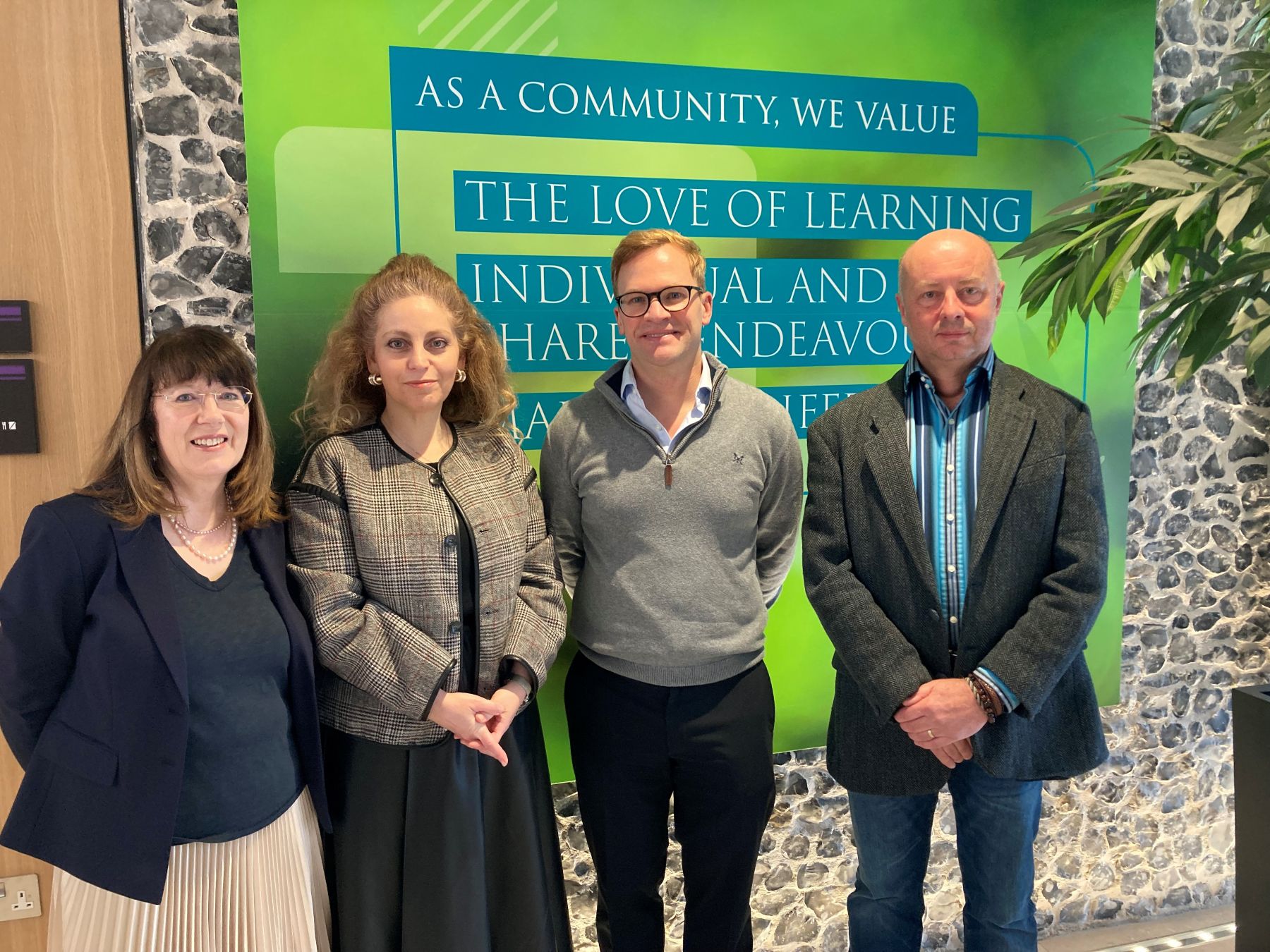
Forum organiser Dr Maria Emmanouilidou, Senior Lecturer in Management at the University of Winchester (second from left) with speakers Professor Maria Burke, Tom Aylward and Vince Holmes-Jefferd.
Taking part in a panel discussion were Dr Abdul Rahman Badwan, a former Lecturer in Computer Systems at Winchester and founder of Southampton-based firm Risovent, and Lee Brown, a senior consultant who guides organisations through complex digital landscapes.
Both said that organisations that used AI to replace staff were short-sighted.
Abdul said: “I’m 100 per cent against the replacement of humans. I started my company because I believe in human skills. It is difficult to replicate the human qualities of imagination and creativity.”
Rather than lay off staff, firms should turn their workers into internal consultants focused on problem solving, said Abdul.
While these new problem-solvers could use AI, he advised: “You must have solid knowledge in your field to know that what AI is telling you is correct. AI is not your friend – it is a tool.”
Lee agreed that AI was “not going to replace humans.”
He told students in the audience: “Focus your skills on becoming an expert in your sector and then home in on areas where you could use AI to solve real-world problems.
But he cautioned: “Always think for yourself – technology will never be 100 per cent right.”
Third member of the discussion panel, Winchester alumnus Jezz Baker, who runs two businesses, including an AI consultancy, advised those going out into the world of work to act ethically.
DBA (Doctorate of Business Administration) student Vince Holmes-Jefferd, a former aircraft design engineer who moved into IT in the 1990s, rounded off the event by discussing the ethics of AI. He polled the audience on their thoughts about the threats of AI and how and if its autonomy should be restricted.
Event organiser Dr Maria Emmanouilidou, Senior Lecturer in Management at the University of Winchester, closed the event by saying: “The future use of AI relies on the judgments we make. I hope this forum helps you to think critically and act wisely.”
Back to media centre