

A University of Winchester academic’s new book champions the work of American philosopher Stanley Cavell who was just as happy discussing Fred Astaire as Friedrich Nietzsche.
Dr Adrian Skilbeck, programme leader for the MA in Philosophy of Education, spoke about his recently published work Stanley Cavell and Education: Voice, Seriousness and Drama at a special “Celebration of Educational Research, Creativity, and Engagement” at the University.
Cavell, whose works include The Claim of Reason and Pursuits of Happiness, explored scepticism, ethics, and continual moral growth and transformation.
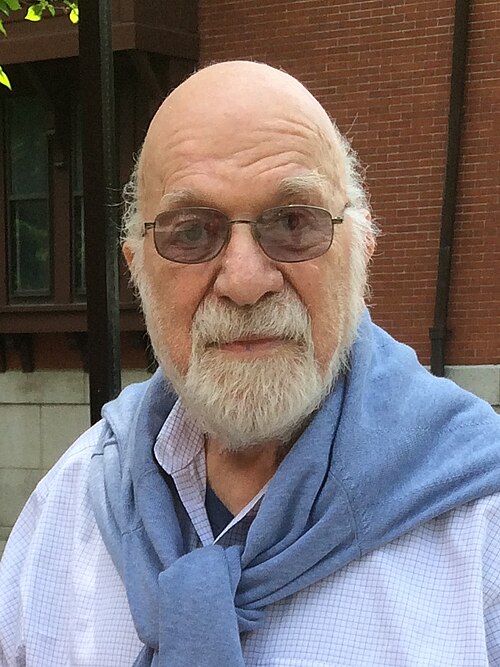
US philosopher Stanley Cavell in 2016, two years before his death
Seven years on from Cavell’s death, Dr Skilbeck believes his work is growing in significance across the worlds of philosophy, music, literature and film studies.
“I studied Drama and Philosophy at university, and I love Cavell because I think he’s someone who reflects that mash-up.
“He started out as a musician and he challenged the rule book of philosophy. He used examples from popular artforms like Hollywood movies in his work because he saw that was where serious philosophy was going on.”
A good example is ‘gaslighting’. The term is now widely used to refer to the manipulation of someone into questioning their perception of reality. The term takes its name from the 1944 Hollywood thriller, Gaslight, starring Ingrid Bergman. Cavell was the first to look at the film as a serious study of the denial of the voice of women.
Cavell’s belief that the development of one’s own voice was central to education has had a great influence on modern educational theories.
“He believed we should trust ourselves to be able to think seriously about things that matter to us - not rely on others to do our thinking for us - and have confidence in expressing our own views.”
“You have to believe you have something worthwhile to say but at the same time be open to criticism.”
These concepts resonate strongly with the aims of many higher education institutions which aim to cultivate critical thinking, independence and civic responsibility.
Dr Skilbeck said he also admires Cavell’s approachable writing style which he believes was influenced by his background in music (he was a jazz saxophonist).
“Cavell’s attention to language is very strongly connected to his own musicality and the influence of music,” said Dr Skilbeck. “He’s as much concerned with how the words will sound as how they read on the page.”
Dr Skilbeck is a member of the University’s Centre of Research for Educational Action and Theory Exchange (CREATE) which organised the celebration event which featured a stand displaying other recent publications by Winchester academics.
Stanley Cavell and Education: Voice, Seriousness and Drama by Adrian Skilbeck is published by Bloomsbury.
Back to media centre