
Psychology (Conversion course)
Apply onlineAre you curious about what drives behaviour? Are you fascinated by the human mind? A psychology Master's degree at Winchester will satisfy your interests as you discover the science behind how we think, feel and behave.
Course overview
Are you interested in becoming a Psychologist? Would you like to enhance your career opportunities with a scientific understanding of human behaviour? If so, then this course is for you. Designed for graduates who have studied other subjects, our MSc Psychology (conversion course) engages students new to psychology with the key areas of social, biological, cognitive, developmental psychology and individual differences. We will also enable you to develop strong research and data analytic skills in both qualitative and quantitative methods. This will prepare you for carrying out your own independent psychology research project. You will engage with the latest research findings and psychological theories, and have the opportunity to contribute to the vibrant research culture at Winchester. On completion you will be able to apply your new psychological knowledge and skills to a range of professional and everyday contexts.
Find out more about the Psychology Department.
Accreditation
This degree is fully accredited by the British Psychological Society for the purpose of eligibility to apply for the Graduate Basis for Chartered Membership, provided students pass the empirical psychology project and achieve an overall pass mark of at least 50%.
What you need to know
Course start date
September
Location
On campus, Winchester
Course length
- 1 year full-time
- 2 years part-time
Apply
Apply online
Typical offer
A first or second-class honours degree
Fees
From £9,550 pa
Why Winchester
- A postgraduate degree accreditation by the British Psychological Society, providing the first step to becoming a psychologist
- High-quality teaching, delivered by experts in their field of psychology
- A vibrant research environment with opportunities to get involved with psychological research
- Study in a friendly and inclusive learning community. You will be supported by a dedicated team of lecturers, your own personal tutor, and one-to-one supervision for your dissertation.
Course details
Learning and teaching
Our psychology programme equips graduates with the knowledge and skills for Graduate Basis for Chartered Membership status with the British Psychological Society. We enable students to confidently apply their new psychological knowledge and skills to professional and applied contexts.
Teaching is primarily through a combination of lectures and seminars, allowing opportunities to discuss and develop your understanding of topics covered in lectures in smaller groups.
In addition to the formally scheduled contact time such as lectures, seminars and workshops, you are encouraged to access academic support from staff within the course team and the wide range of services available to you within the University.
The Department of Psychology places great emphasis on the quality of teaching, and discussions of learning and teaching are regular features of departmental meetings. We highly value the views of our students and encourage them to contribute to our discussions via their student representatives.
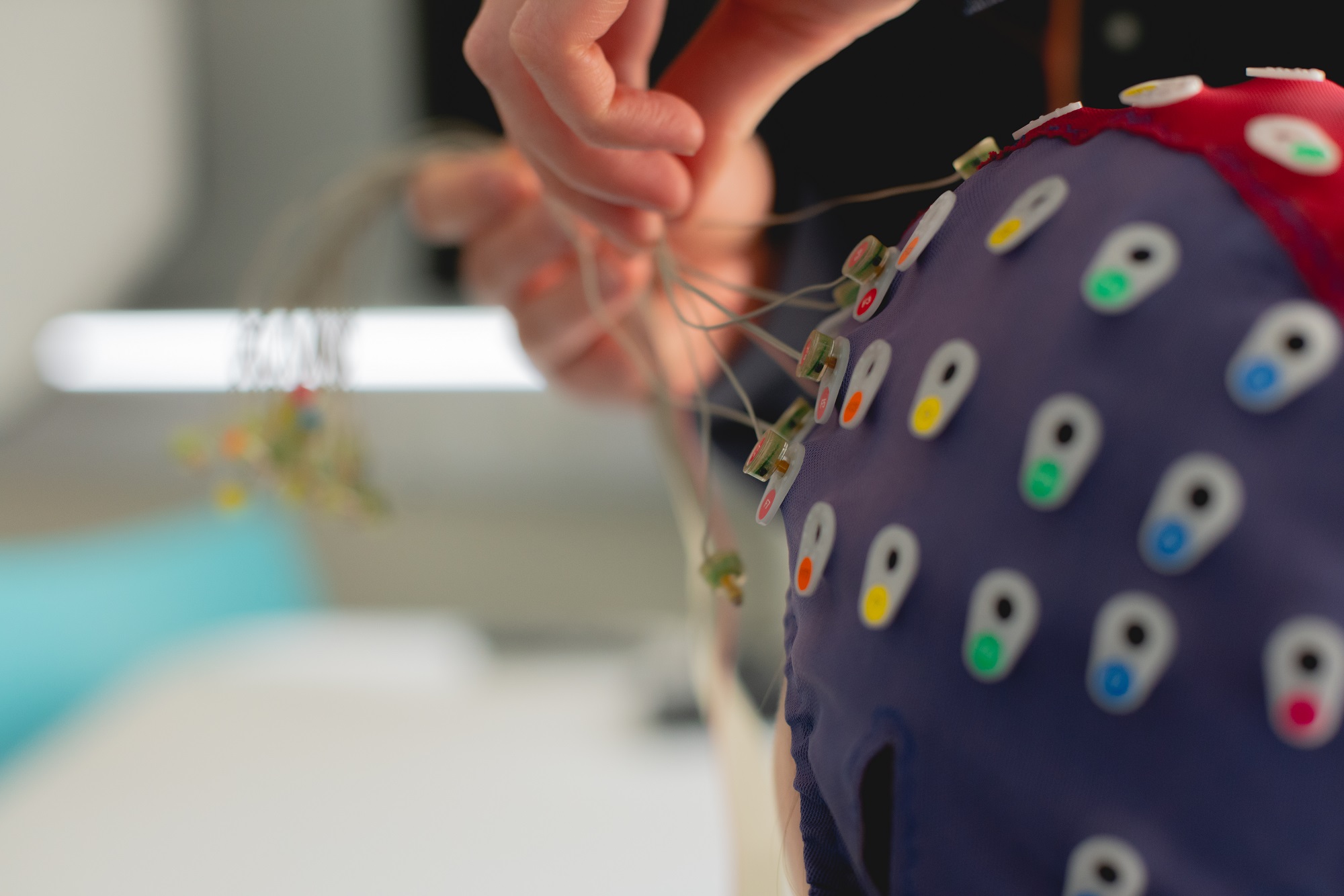
The Department houses several laboratories which support cutting edged research in social, developmental, cognitive and biological psychology, and has attracted significant investment in recent years to support both our teaching programmes and our research. All academic staff play an active role in research and in this MSc, students are able to undertake their own research project and make contributions to the vibrant research culture.
Key features of the student experience are:
- Department research seminars (approximately on a fortnightly basis during term time)
- A range of academic and social activities organised by the student-led Psychology Society
- Opportunities to get practical experience through voluntary research assistant work
Overall Workload
Your overall workload consists of class contact hours, independent learning and assessment activity. The following information gives an indication of how much time you will need to allocate to different activities at each level of the course.
Independent Learning
The course is academically demanding and you will be expected to apply independent and critical learning, engage in independent and collaborative research, problem-solving and analysis with the support of staff. You take responsibility for your own learning and are encouraged to make use of the wide range of available learning resources available.
Location
Taught elements of the course take place on campus in Winchester.
Assessment
We use a range of methods for assessing learning. A non-exhaustive indicative list of assessment types you might encounter includes essays, portfolios, supervised independent work, presentations, research proposals, blog posts, articles, written exams, or practical exams.
We ensure all students have an equal opportunity to achieve module learning outcomes. As such, where appropriate and necessary, students with recognised disabilities may have alternative assignments set that continue to test how successfully they have met module learning outcomes.
Feedback
We are committed to providing timely and appropriate feedback to you on your academic progress and achievement in order to enable you to reflect on your progress and plan your academic and skills development effectively. You are also encouraged to seek additional feedback from your course tutors.
Further information
For more information about our regulations for this course, please see our Academic Regulations, Policies and Procedures.
Modules
Please note the modules listed are correct at the time of publishing. The University cannot guarantee the availability of all modules listed and modules may be subject to change. The University will notify applicants of any changes made to the core modules listed. For further information please refer to winchester.ac.uk/termsandconditions
Modules
This module provides students with the opportunity to undertake an in-depth and independent empirical study within the field of psychology. Students will apply theoretical and methodological knowledge and research skills gained across the programme. They will be required to resolve the complex conceptual, methodological and practical problems that are often encountered by psychological researchers. Completion of a dissertation will demonstrate their comprehensive understanding of all stages in the research process, an ability to deal with complex issues creatively and systematically, and to communicate information in a clear and appropriate fashion. The module will prepare students to undertake future psychological research through the practical experience that they have gained under the supervision of a member of academic staff.
This module aims to provide students with opportunities to develop and enhance a range of skills and competencies expected of a psychology postgraduate. The focus is on the application of psychology and related skills in different career contexts. Students will build on their subject specific and research methods knowledge from other modules. In personal tutorials and related group sessions, students will gain an awareness of the Psychology-related career pathways available to them upon graduation and will be helped to evolve their career goals and aspired professional identities.
This module develops students’ quantitative and qualitative psychological research skills. We will cover quantitative and qualitative research designs (e.g., correlational, between or within-subjects) and data collection methods (e.g. interviews, vignettes, story completion tasks, surveys and experiments). Students will learn about quantitative analytical methods (e.g., correlations, t-tests, ANOVA, regression and power analysis) and qualitative analytical methods (e.g., thematic analysis, interpretative phenomenological analysis, discourse analysis). The module will cover the conceptual and historical development of research methods and the theoretical perspectives underpinning quantitative and qualitative psychological research. Students will acquire research skills (collecting and analysing data), critical skills (e.g. evaluating research and methods), and communication skills (e.g., writing reports and research results). Students will gain further understanding of statistical software (e.g., SPSS) and a broader awareness of ethical issues relating to quantitative and qualitative psychological research.
This module explores contemporary theories and applications of developmental and social psychology. Students will be introduced to the major historical and contemporary theoretical perspectives on child and adolescent development, as well as key conceptual and historical debates in social psychology. For developmental psychology, key empirical studies, applied issues, and developmental diversity will be critically examined in areas such as attachment, social relations, language, and cognitive development. Students will gain critical understanding and practical experience of observational research methods with child participants. For social psychology, key topics such as identity, attitudes, prejudice, stereotyping, attribution theory, and leadership will be covered, as well as critical approaches to social psychology and traditions emerging from these, such as social constructionism. Across both developmental and social psychology, the influence of diverse sociocultural environments will be considered, as well as the importance of cultural context upon experience and behaviour.
This module provides students with a broad overview of fundamental topics in key areas of psychology: biology, cognition, and individual differences. Topics related to biological processes include typical and atypical neuropsychology, neuroscience, and behavioural genetics. Topics related to cognition include sensation and perception, attention, language, learning, memory, problem solving, and consciousness. Topics related to individual differences include personality, intelligence, and psychometric test development. Conceptual and historical issues relevant to biological, cognitive, and individual differences psychology are also covered. Students will gain critical understanding and practical experience of research methods used by psychologists working in biological, cognitive, and individual differences topics.
Entry requirements
Normally a first or second-class Honours degree
Normally a first or second-class Honours degree.
If English is not your first language: IELTS 6.0 overall with a minimum of 5.5 in writing
Course enquiries and applications
If you are living outside of the UK or Europe, you can find out more about how to join this course by emailing our International Recruitment Team at International@winchester.ac.uk.
2027/2028 Course Tuition Fees
| UK / Channel Islands / Isle of Man / Republic of Ireland |
International |
|
|---|---|---|
| Full-time | £10,050 | £17,450 |

Additional tuition fee information
If you are a UK student starting your degree in January / September 2027, the first year will cost you £10,050**.
If finance is a worry for you, we are here to help. Take a look at the range of support we have on offer. This is a great investment you are making in your future, so make sure you know what is on offer to support you.
**The University of Winchester will charge the maximum approved tuition fee per year.
Additional costs
All teaching and assessments are included in your tuition fees, including, lectures/guest lectures and tutorials, seminars, laboratory sessions and specialist teaching facilities. You will also have access to a wide range of student support and IT services.
There might be additional costs you may encounter whilst studying. The following highlights the mandatory and optional costs for this course:
Mandatory
Disclosure and Barring Service
A Disclosure and Barring Service (DBS) clearance check may be required if you undertake a placement, volunteering, research or other course related activity where you will have contact with children or vulnerable adults. The requirement for a DBS check will be confirmed by staff as part of the process to approve your placement, research or other activity. The indicative cost is £49.50.
Scholarships, bursaries and awards
We have a variety of scholarship and bursaries available to support you financially with the cost of your course. To see if you’re eligible, please see our Scholarships, Bursaries and Awards page.
Career prospects
Those wishing to pursue professional careers in psychology - such as clinical, educational, or occupational psychology - need to undertake further study and training to gain professional recognition as a Chartered Psychologist. Graduates will be eligible to apply for Graduate Basis for Chartered Membership status, which is an entry requirement for many accredited postgraduate training courses in psychology. This is the first step towards becoming a Chartered Psychologist. Professional careers in psychology can be pursued in the following fields; clinical, educational, occupational, sports and exercise, health, counselling, neuropsychology, forensic psychology and academic teaching and research.
Due to the wide range of skills, and the rigour with which they are taught, training in psychology is widely accepted as providing an excellent preparation for many careers. In addition to subject knowledge, an accredited degree in psychology also develops skills in communication; numeracy; analysis; teamwork; critical thinking; computing; independent learning; and many others, all of which are highly valued by employers.
The University of Winchester ranks in the top 10 in the UK for graduates in employment and/or further study (Graduate Outcomes Survey 2023, HESA).
Our careers service