A new book edited by a University of Winchester academic looks at how constitutional ideas have been adopted and adapted by different states around the world and through history.
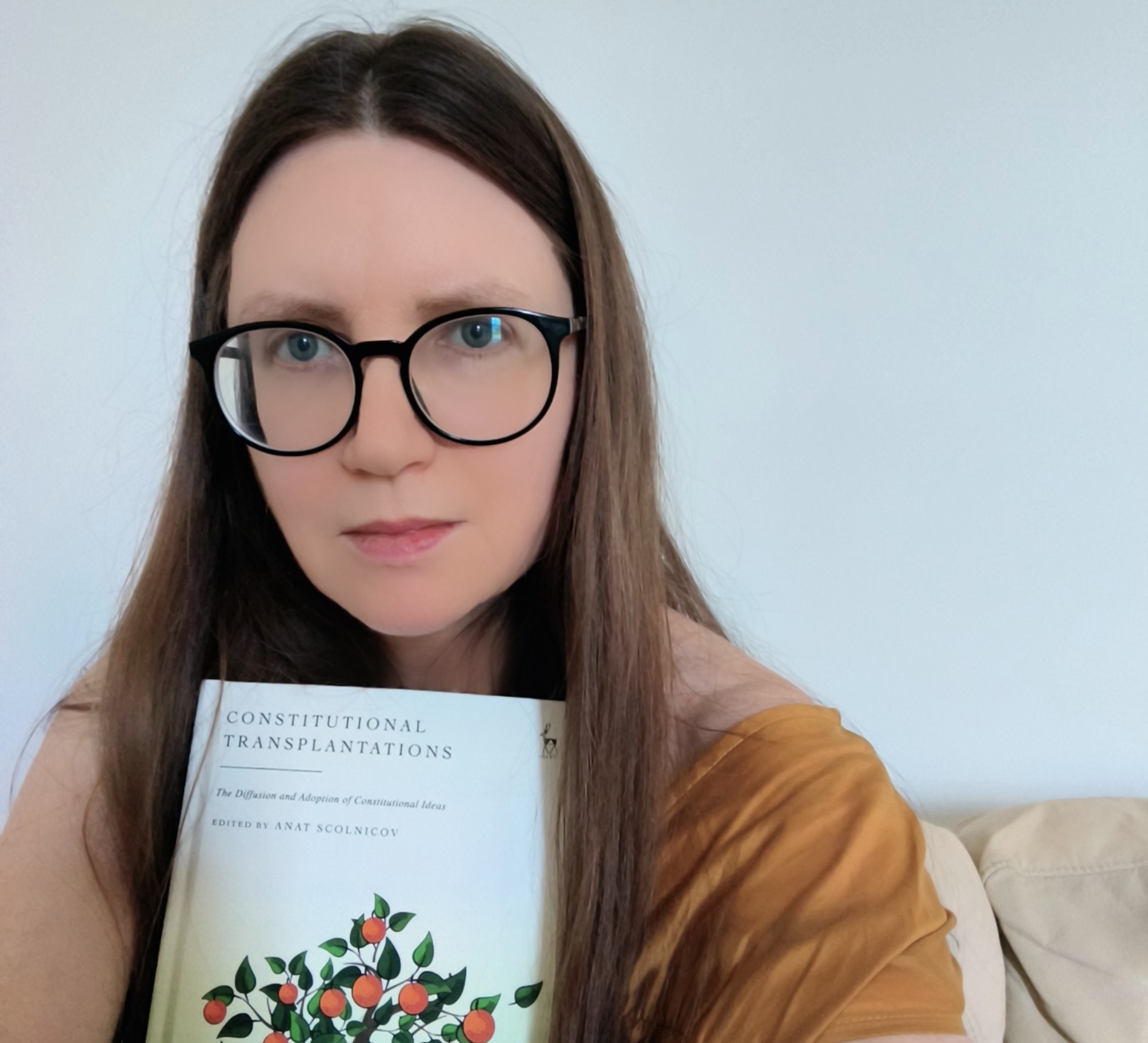
Constitutional Transplantations: The Diffusion and Adoption of Constitutional Ideas, edited by Professor of Law Anat Scolnicov, explores the movement of constitutional ideas around the globe from Roman times to the present day.
Professor Scolnicov has assembled a distinguished group of contributors which includes judges as well as academics from the fields of law, history and political philosophy.
The authors examine legal and constitutional systems in Asia, Europe, North and South America, as both sources and recipients of transplantations and look at the term 'constitutional’ in its broadest sense, including its connections to international law EU law and human rights.
“Rather than just being a collection of essays, this book makes a statement about how states ‘talk’ to each other and how constitutional ideas move across time and space,” said Professor Scolnicov .
The front cover shows a tree bearing fruit and, in her chapter, Professor Scolnicov uses the metaphor of ‘fertile soil’ to look at how constitutional ideas taken from one country can thrive or wither when transplanted to a different part of the worlds with different cultures and values.
Sometimes the transplantation is not voluntary but imposed, as in post-Second World War Japan, whose new constitution was written by the occupying US forces. The Americans, whose goal was to draft a constitution that would preclude Japan from a future war, included some features taken from the US Constitution, such as the separation of religion from state.
More commonly states take on constitutional models from other states they see as good role models. For instance, some former communist states of Eastern Europe took constitutional ideas like human rights and rule of law from Western democracies they wished to emulate.
While Professor Scolnicov argues for the importance of constitutional transplantations for promoting democracy and rule of law globally, she also warns that sometimes transplantations have been used abusively. That occurs when a state adopts a constitutional measure from a democratic state but applies it in a context in which it contributes to democratic backsliding. She suggests that a recent example occurred in Hungary under Viktor Orbán, which made changes to its courts not uncommon in democracies, but which, she argues, may be seen as an opportunity for Orbán to pack the courts with loyalist judges.
Preparations for the book have provided valuable research opportunities for a number of Professor Scolnicov ‘s Law students at the University of Winchester – James Veal, Sophie Rogers, Lewis Wells and Tom Atkin (who have all received acknowledgements in print).
Constitutional Transplantations: The Diffusion and Adoption of Constitutional Ideas is published by Hart Publishing. For more details follow this link.
Back to media centre